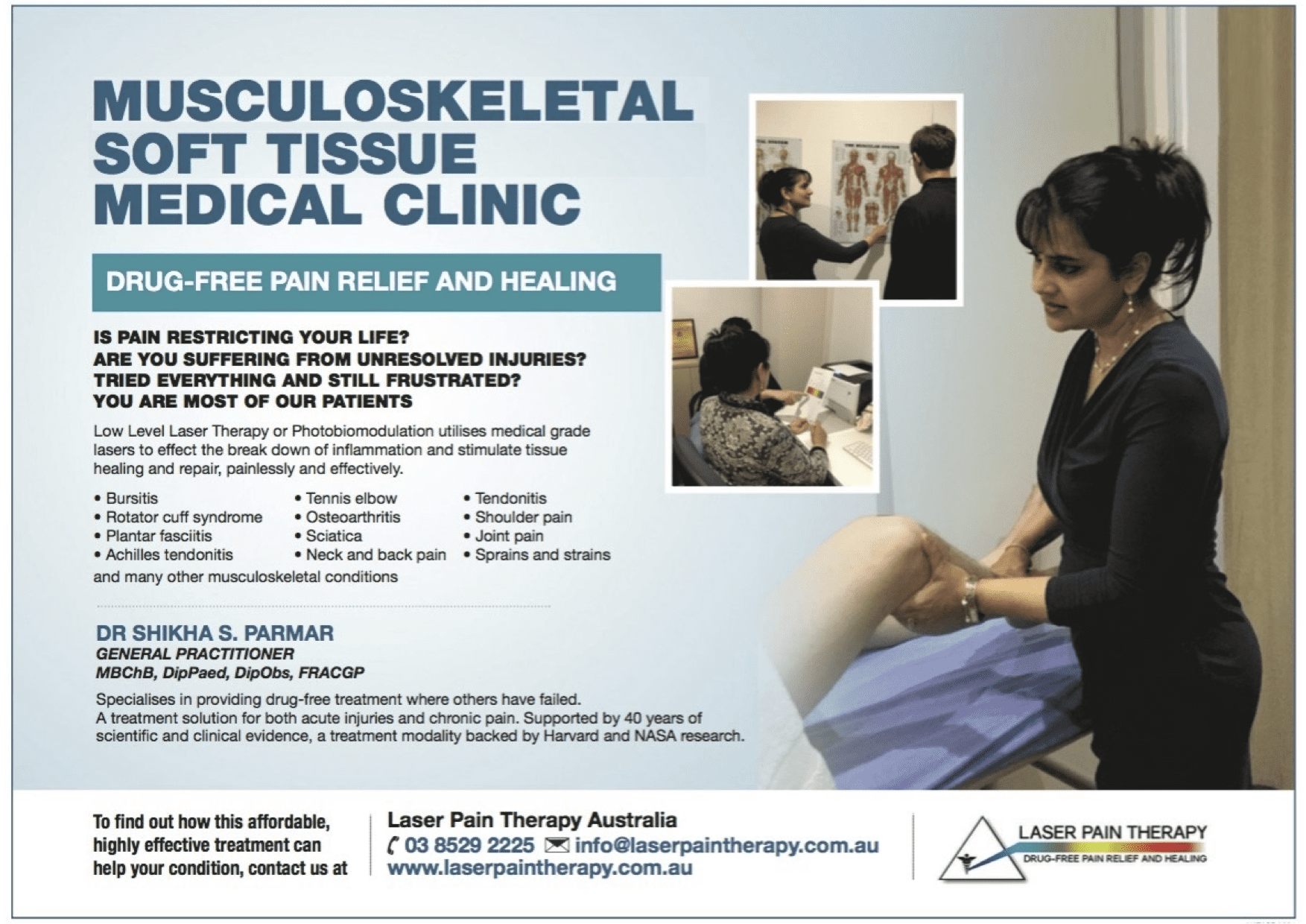
Treatment of Achilles Tendonitis Using LLLT/PBMT
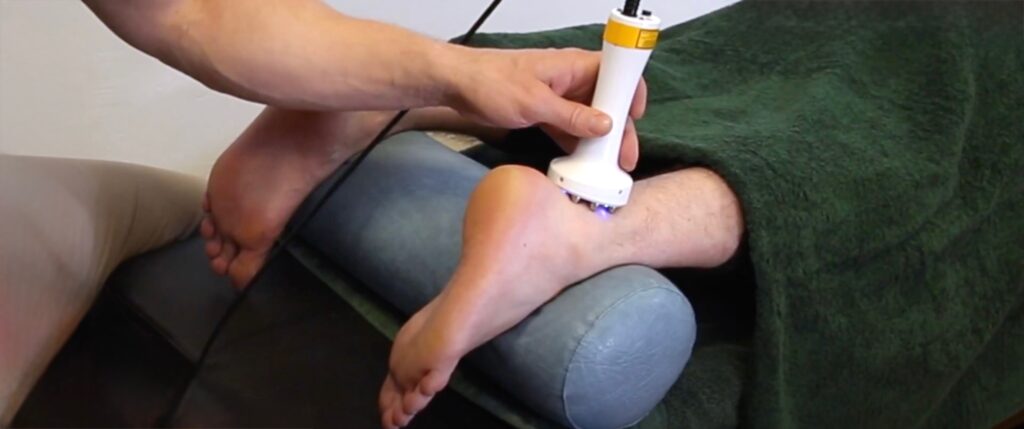
Low Level Laser Therapy (LLLT), also known as Photobiomodulation Therapy (PBMT), uses red and near-infrared light applied over targeted areas. In our clinic it is used as part of a GP-led treatment approach for selected musculoskeletal pain and injury presentations, including Achilles tendonitis and related Achilles tendon pain.
PBMT/LLLT is non-invasive and generally well tolerated. Suitability and response vary, and treatment recommendations depend on the diagnosis, severity, duration of symptoms and individual clinical factors. PBMT/LLLT has been studied for a range of musculoskeletal pain and injury conditions. See our references page for supporting literature.
Gentle. Drug-Free. Evidence-Informed
Key Points
- Achilles tendonitis involves inflammation or irritation of the Achilles tendon, usually related to overuse or excessive tendon load.
- Symptoms include pain, swelling, tenderness and stiffness along the tendon, often aggravated by running, jumping or walking uphill.
- Common causes include repetitive stress, poor footwear, sudden increases in activity intensity, hill running, high heels, toe walking, and calf tightness.
- Standard treatments such as rest, ice, anti-inflammatory medication, stretching, massage or exercise may provide temporary relief for some people, but are not suitable or effective for everyone.
- Low Level Laser Therapy (LLLT), or Photobiomodulation Therapy (PBMT), is considered for selected Achilles tendonitis presentations where tendon irritation, pain or local inflammatory processes are contributing to symptoms.
- LLLT may be particularly relevant where pain limits rehabilitation or where loading, stretching or exercise aggravates sensitive tendon tissue.
- At Laser Pain Therapy, LLLT is integrated into a structured six-week program led by Dr Shikha Parmar, with activity advice and rehabilitation support.
- LLLT can be considered for people with persistent Achilles tendon pain who have not improved with usual conservative care, after appropriate medical assessment.
What Is Achilles Tendonitis?
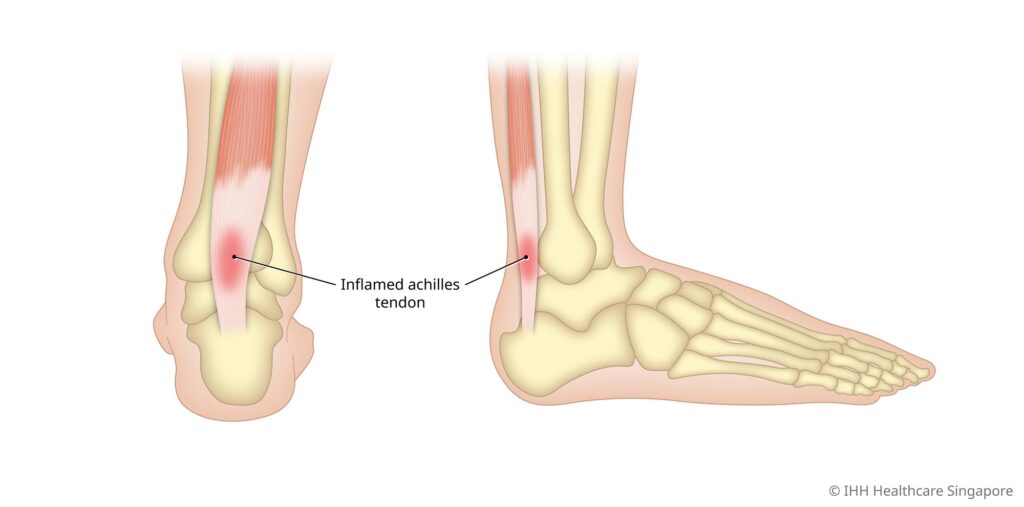
Achilles tendonitis refers to inflammation or irritation of the Achilles tendon, the large tendon at the back of the ankle connecting the calf muscles to the heel. It commonly results from repetitive stress or overuse and is seen in people who run, jump or increase activity too quickly.
It can cause pain, stiffness and swelling in the tendon, particularly during activity, when first starting to move, or when pressure is applied.
Causes and Risk Factors of Achilles Tendonitis
- Repetitive stress or overuse, particularly with running or jumping
- Over-training or unaccustomed activity, including “too much, too soon”
- Sudden change in training surface, such as moving from grass to bitumen
- Toe walking or prolonged high-heel use
- Hill running
- Poor footwear
- Improper training techniques
- Sudden increases in activity intensity or frequency
- Muscle strength or flexibility imbalance, including tight calf muscles
- Age-related changes in tendon flexibility and resilience
Symptoms of Achilles Tendonitis
- Tightness or burning pain at the start of activity along the tendon, which may ease during activity but worsen afterward
- Stiffness first thing in the morning, after prolonged sitting, or at the beginning of exercise
- A limp or reduced confidence loading the tendon
- Pain, stiffness and loss of strength around the affected area
- A visible bump or swelling in the tendon or behind the heel bone
- Irritation from shoes rubbing against the tender area
- Reduced pain when wearing shoes with a slight heel compared with flat shoes
How is Achilles Tendonitis Diagnosed?
Achilles tendonitis is diagnosed through clinical assessment by Dr Shikha Parmar, including a detailed history of symptoms, activity patterns and any recent changes in activity or training.
Physical examination assesses tenderness, swelling and ankle movement. Ultrasound, and sometimes MRI, may be used to confirm tendon damage or exclude other conditions such as tendon rupture or tear.
Achilles Tendonitis – Treatment Overview
Low Level Laser Therapy (LLLT), also known as Photobiomodulation Therapy (PBMT), is a non-invasive treatment approach used as part of a structured program for selected Achilles tendonitis presentations. It may help modulate pain and local inflammatory processes and support tendon recovery without adding mechanical stress to the vulnerable Achilles tendon.
Why Consider Low Level Laser Therapy (LLLT)?
Many patients present after limited relief from icing, stretching, massage, anti-inflammatory medication, injections or exercise programs. These standard treatments may ease symptoms temporarily, but are not suitable for every stage of recovery, especially if loading or stretching aggravates sensitive tendon tissue.
Why ice, anti-inflammatories, cortisone, and PRP may not support long-term recovery. Read more here.
How LLLT Supports Healing
LLLT uses red and near-infrared light and may support:
- Helping modulate inflammation and oxidative stress
- Local circulation and oxygen delivery
- Lymphatic drainage
- Cellular energy production (ATP)
- Collagen and tendon recovery processes where irritation is present
- Assisting pain reduction without mechanical loading or stressing the Achilles tendon

Non-Invasive and Supported by Research
PBMT/LLLT is non-invasive and generally well tolerated. It has been studied in a range of musculoskeletal pain and injury conditions. Individual responses vary, and outcomes depend on the condition being treated and the stage of recovery. Read more here.
See how LLLT may support the cellular environment involved in tissue recovery here.
Our Treatment Program
All patients are assessed by Dr Shikha Parmar (GP). Treatment is delivered within a structured six-week program, including:
- Up to 12 LLLT sessions
- Early progress review after the first 6 treatments
- Individualised advice and activity modification
- Guided rehabilitation to support longer-term function
Progress is reviewed during the program. Many patients notice appreciable improvement after the first 6 treatments. If there has not been sufficient improvement by this review point, further treatment may not be recommended.
View the full treatment protocol and expected outcomes here.
Ready to Discuss Your Achilles Tendonitis Treatment Options?
If you are struggling with persistent Achilles tendon pain, we invite you to contact our team at Laser Pain Therapy to discuss the suitability of LLLT for your presentation. Treatment suitability and outcomes vary, and assessment is required before recommendations can be made.
Contact us today to arrange your consultation.
📍 Located in Melbourne
📞 (03) 8529 2225 Contact Us