Bursitis Treatment with LLLT/PBMT
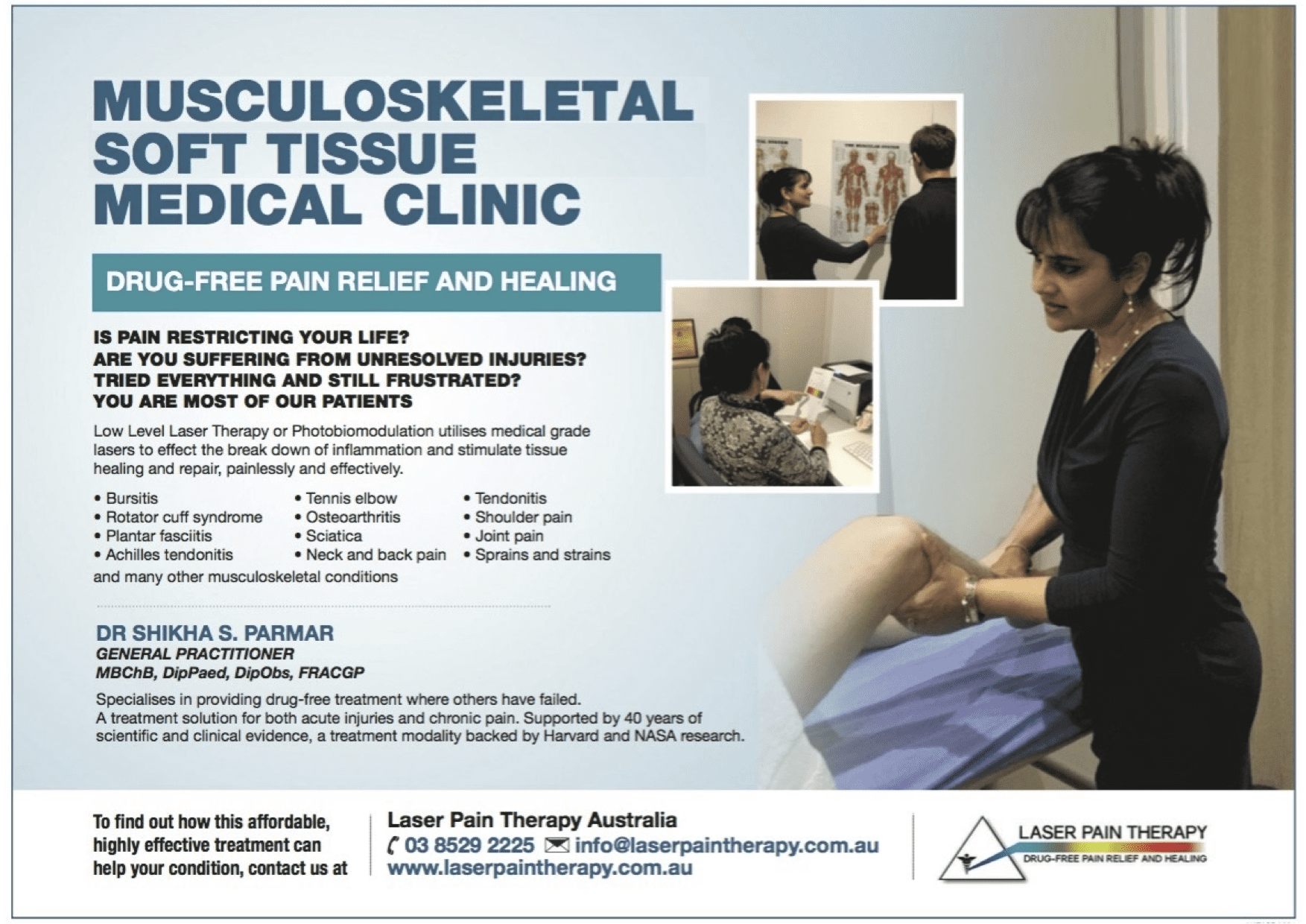
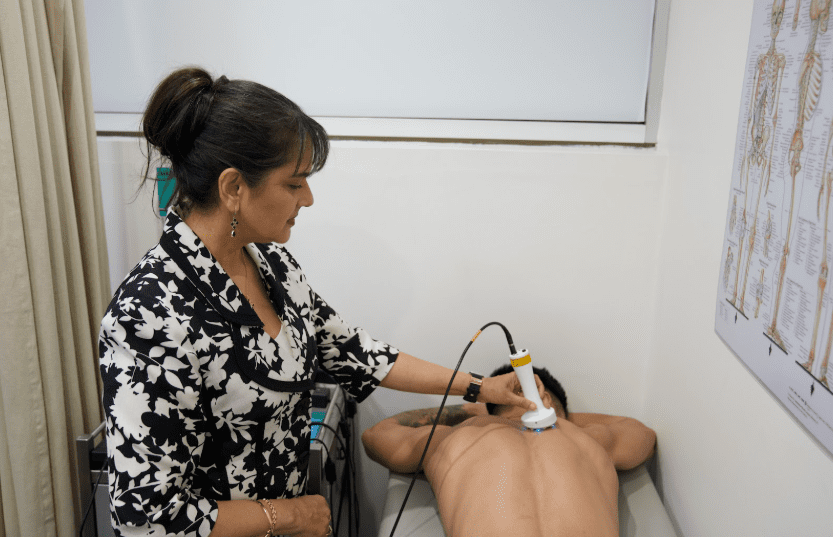
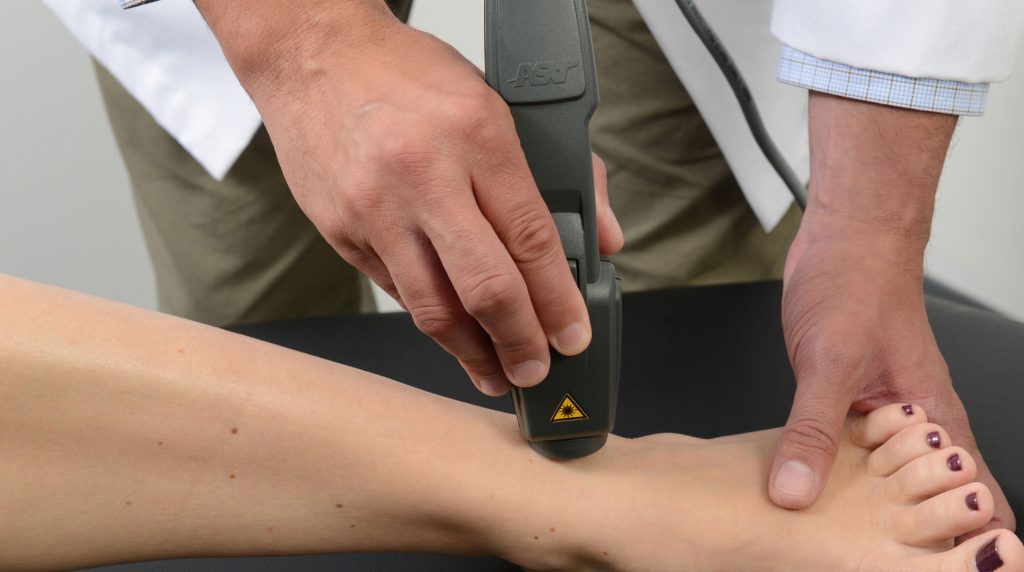
Low Level Laser Therapy (LLLT), also known as Photobiomodulation Therapy (PBMT), uses red and near-infrared light applied over targeted areas. In our clinic it is used as part of a GP-led treatment approach for selected bursitis presentations, particularly deeper bursitis associated with tendon, ligament or soft tissue irritation.
PBMT/LLLT is non-invasive and generally well tolerated. Suitability and response vary, and treatment recommendations depend on the diagnosis, severity, duration of symptoms and individual clinical factors. PBMT/LLLT has been studied for a range of musculoskeletal pain and injury conditions. See our references page for supporting literature.
Gentle. Drug-Free. Evidence-Informed
Key Points
- Bursitis is the inflammation of a bursa, a fluid-filled sac that cushions joints and reduces friction between tendons and bones.
- In many cases, bursitis is secondary to underlying mechanical overload, tendon dysfunction, or adjacent soft tissue injury.
- The bursa sits between tendons, muscles and bones to reduce friction. If the tendon is overloaded, degenerative or mechanically impaired, altered biomechanics can lead to increased friction, compression or shear forces across the bursa, causing reactive inflammation and clinical bursitis.
- Common causes include repetitive movements, overuse, trauma and age-related degeneration.
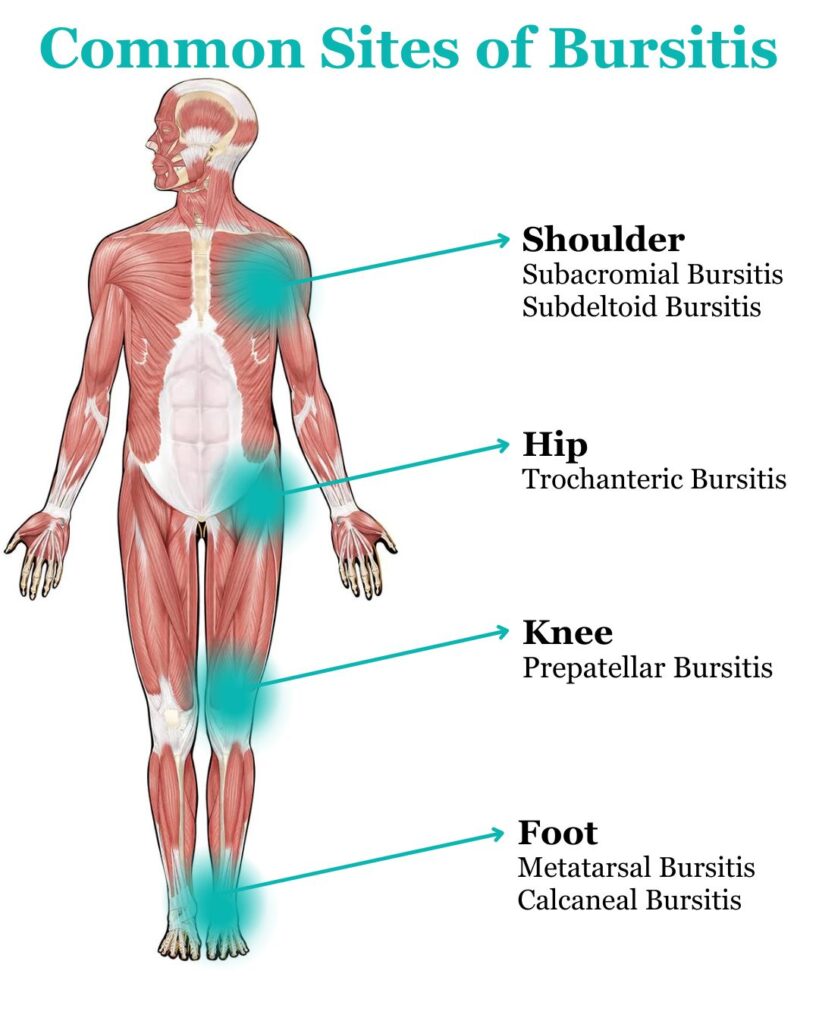
- Common sites affected by bursitis include the shoulder, elbow, knee, hip and heel.
- LLLT/PBMT is considered for selected deeper forms of bursitis where local inflammatory processes, bursal irritation and soft tissue overload are contributing to symptoms.
- LLLT/PBMT is not suitable for bursitis involving visible, localised swelling, such as some knee or elbow bursitis with fluid buildup; draining or other medical treatment may be necessary first.
- LLLT/PBMT is a non-invasive treatment approach that may support pain reduction and rehabilitation where sensitive tissues need protection from excessive mechanical stress.
What is Bursitis?
Bursitis is the inflammation of a bursa, a small, fluid-filled sac that acts as a cushion between bones and soft tissues, such as muscles, tendons and skin. Bursae reduce friction and allow smooth movement of these structures. When a bursa becomes inflamed, it can cause pain, swelling and limited movement. Bursitis commonly occurs in joints such as the shoulder, elbow, knee and hip, often as a result of overuse or trauma. Chronic bursitis can lead to long-term discomfort and impaired mobility if not treated effectively.
Causes of Bursitis
Several factors contribute to the development of bursitis:
- Repetitive Movements: Continuous motion or pressure on a joint can irritate the bursa, causing inflammation. Activities such as kneeling, lifting, or overhead movements can strain the bursa.
- Overuse: Excessive use of a joint without adequate rest or recovery increases the likelihood of bursitis, especially in athletes or individuals who perform repetitive tasks.
- Trauma or Injury: Direct blows or falls onto a joint can irritate or damage the bursa, leading to inflammation.
- Age-Related Changes: As we age, the bursae become less resilient, making them more susceptible to inflammation.
- Infection: In some cases, bursitis can be caused by an infection, leading to more severe symptoms and requiring immediate medical treatment.
Common Sites Involved
Bursitis can occur in several areas of the body, including:
- Shoulder: The subacromial bursa in the shoulder is commonly affected, especially in individuals performing overhead activities. Read more here.
- Hip: Trochanteric bursitis, affecting the hip, is common in runners or those who frequently engage in side-to-side movements. Read more here.
- Knee: Various bursae of the knee can become inflamed from activities such as kneeling. Read more here.
- Foot: The bursa located at the bottom of the foot, often near the base of the big toe (Bunion bursitis) or in the heel (retrocalcaneal bursitis), can become inflamed, usually due to pressure from poorly fitted footwear or repetitive stress, such as walking or running. Read more here.
- Heel: The bursa between the heel and the Achilles tendon can become inflamed, often due to excessive pressure from activities such as running. Read more here.
In Many Cases, Bursitis is Secondary to Underlying Tendon Dysfunction
In many cases of bursitis, especially outside purely traumatic or infective causes, the condition is often secondary to underlying mechanical overload, tendon dysfunction, or adjacent soft tissue injury. The bursa acts as a friction-reducing structure between tendons, muscles, and bones. When the underlying tendon is overloaded, degenerated, or mechanically impaired, altered biomechanics cause increased friction, compression, or shear forces across the bursa, which leads to reactive inflammation, resulting in clinical bursitis.
Examples of Bursitis and Associated Tendon Involvement:
- Subacromial Bursitis: Associated with rotator cuff tendons (supraspinatus, infraspinatus, subscapularis).
- Trochanteric Bursitis: Often linked with gluteus medius/minimus tendinopathy.
- Pes Anserine Bursitis: Associated with overload of sartorius, gracilis, and semitendinosus tendons.
- Deep infrapatellar Bursitis: below the kneecap associated with patellar tendinopathy
A key distinction is that olecranon (elbow) bursitis and prepatellar knee bursitis – here tendon injury is not a common primary cause. In most other bursae, especially in chronic cases, bursitis is more likely to be reactive to altered tendon mechanics or muscle imbalance.
Symptoms
The symptoms of bursitis may vary depending on the location of the affected bursa but generally include:
- Pain: Localised pain over the affected joint, which may worsen with movement or pressure.
- Swelling: swelling around the affected area, often accompanied by warmth.
- Stiffness: A limited range of motion in the affected joint.
- Tenderness: Sensitivity when touching or applying pressure to the inflamed bursa.
- Reduced Function: Difficulty performing everyday activities due to pain or stiffness in the joint.
Diagnosis
Diagnosing bursitis involves:
- Medical History: Dr. Shikha Parmar will take a thorough history of symptoms, including any repetitive movements or activities that may have caused or exacerbated the condition.
- Physical Examination: A hands-on examination to assess pain, swelling, range of motion, and tenderness in the affected area.
- Imaging: X-rays or ultrasound may be used to confirm the diagnosis and rule out other conditions such as fractures or joint abnormalities. In some cases, MRI may be used to assess the extent of the inflammation or any tendon damage.
A Note About Superficial Visible Bursitis
For superficial bursitis that causes visible, localised swelling, such as in the knee or elbow (olecranon bursitis), LLLT/PBMT is not suitable for treating significant fluid buildup. In these cases, draining the bursa or other medical management may be necessary before further treatment. However, LLLT/PBMT can be considered for deeper bursitis forms, often associated with tendon or ligament injury, osteoarthritis, degenerative conditions or cartilage damage. By helping modulate inflammation and pain, treatment may support rehabilitation and strengthening where appropriate.
Bursitis – Treatment Overview
Low Level Laser Therapy (LLLT), also known as Photobiomodulation Therapy (PBMT), is considered as part of a structured program for selected bursitis presentations. It may help modulate local inflammatory processes, bursal irritation, surrounding tendon and muscle irritation, and pain sensitisation without adding mechanical stress to already inflamed and vulnerable tissues.
Why Consider Low Level Laser Therapy (LLLT)?
Many patients present after limited or short-term relief from ice, medications, massage, exercises, splints or injections. These standard treatments may temporarily ease symptoms but are not suitable or effective for everyone, and may aggravate sensitive tissues if introduced too early. LLLT/PBMT can be considered where inflammation and micro-trauma persist and where excessive loading may delay recovery.
Why ice, anti-inflammatories, cortisone, and PRP may not support long-term recovery. Read more here.
How LLLT Supports Healing
LLLT uses red and near-infrared light and may support:
- Helping modulate inflammation and oxidative stress
- Local circulation and oxygen delivery
- Lymphatic drainage
- Cellular energy production (ATP)
- Soft tissue and bursal recovery processes where irritation is present
- Assisting pain reduction without stressing or irritating the affected bursa
Non-Invasive and Supported by Research
PBMT/LLLT is non-invasive and generally well tolerated. It has been studied in a range of musculoskeletal pain and injury conditions. Individual responses vary, and outcomes depend on the condition being treated and the stage of recovery Read more here.
See how LLLT may support the cellular environment involved in tissue recovery here.
Our Treatment Program
All patients are assessed by Dr Shikha Parmar (GP). Treatment is delivered within a structured six-week program, including:
- Up to 12 LLLT sessions
- Early progress review after the first 6 treatments
- Individualised advice and activity modification
- Guided rehabilitation to support longer-term function
Progress is reviewed during the program. Many patients notice appreciable improvement after the first 6 treatments. If there has not been sufficient improvement by this review point, further treatment may not be recommended.
View the full treatment protocol and expected outcomes here.
Ready to Discuss Your Bursitis Treatment Options?
If you are struggling with bursitis or related soft tissue pain, we invite you to contact our team at Laser Pain Therapy to discuss the suitability of LLLT for your presentation. Treatment suitability and outcomes vary, and assessment is required before recommendations can be made.
Contact us today to arrange your consultation.
📍 Located in Melbourne
📞 (03) 8529 2225 Contact Us