A hamstring that grabs during a walk, a calf that tightens after tennis, or a sore back after lifting can seem like a straightforward muscle strain. Yet the best treatments for muscle strains depend on more than where it hurts. The severity of tissue injury, the time since it occurred, your medical history and the demands you need to return to all affect the right recovery plan.
A strain occurs when muscle fibres or the tendon connecting muscle to bone are overstretched or torn. Minor strains may settle within days or a few weeks. More substantial tears can take considerably longer and may require a structured rehabilitation plan. Pushing through pain too soon is one of the common reasons a manageable injury becomes recurrent pain or prolonged loss of function.
Best treatments for muscle strains: start with the right assessment
Muscle strain symptoms can overlap with tendon injury, joint problems, nerve irritation and, occasionally, a fracture. An assessment is particularly valuable when pain is severe, swelling or bruising appears quickly, there is a visible change in the muscle shape, or you cannot use the affected limb normally.
A clinician will consider how the injury happened, locate the painful structure and assess movement, strength and function. This helps distinguish a mild grade 1 strain from a partial grade 2 tear or a more serious grade 3 tear. Imaging is not needed for every strain, but may be appropriate when the diagnosis is unclear or a significant tear is suspected.
Seek prompt medical attention if you heard a pop at the time of injury, have marked weakness, numbness, increasing swelling, inability to bear weight, fever, or pain that is worsening rather than settling. People taking blood-thinning medication, and older adults with sudden severe pain, should also be assessed promptly.
The first 48 to 72 hours: protect without complete rest
In the early phase, the goal is to avoid further tissue damage while keeping the body gently moving. Stop the activity that caused the injury and avoid stretching into sharp pain, sprinting, heavy lifting or deep massage over a freshly injured area. Depending on the site, temporary support such as a compression bandage may improve comfort and limit swelling.
Short periods of relative rest are useful. Complete bed rest, however, can lead to stiffness, reduced circulation and loss of confidence in movement. Gentle, pain-limited movement of nearby joints is often appropriate from the outset. For example, someone with a mild calf strain may perform comfortable ankle movements, while avoiding a forceful calf stretch.
Cold packs can provide short-term pain relief for some people, particularly in the first 24 hours. Apply a wrapped cold pack for brief periods and avoid placing ice directly on skin. Heat may feel soothing later, once acute swelling and heat have settled, but it is not a cure for the underlying injury. The most useful choice is the one that improves comfort without encouraging you to overload the muscle.
Pain medicines may be appropriate for some patients, but they are not risk-free and should be considered in the context of your health history and other medicines. Anti-inflammatory medicines can be unsuitable for people with kidney disease, stomach ulcers, cardiovascular conditions or certain medication regimens. A doctor or pharmacist can help determine whether medication is appropriate rather than relying on it to mask pain during activity.
Graded loading is what rebuilds capacity
After the initial painful phase, the priority shifts from protection to carefully graded loading. Muscles heal by forming new tissue, but that tissue needs progressive movement and strengthening to regain its ability to absorb force. Too little loading can leave the area weak and stiff; too much, too soon can re-injure it.
The right starting point may be gentle isometric exercises, where the muscle contracts without significant joint movement. As pain settles, this can progress to controlled range-of-motion work, light resistance and then functional exercises that reflect daily life, work or sport.
A desk worker with a neck or forearm strain may need a plan addressing workstation position, breaks and gradual tolerance for keyboard or mouse use. A runner recovering from a hamstring strain needs more than pain-free walking. They require progressive strengthening, controlled running drills and a staged return to speed before resuming hills, intervals or competition.
Pain is useful information, but it is not always a simple stop signal. Mild discomfort during rehabilitation can be acceptable when it settles quickly and does not worsen later that day or the following morning. Sharp pain, limping, loss of movement or a clear increase in symptoms means the load was likely too high and should be adjusted.
Why stretching alone is rarely enough
Stretching can restore comfortable movement when used at the right time, but aggressive early stretching may irritate healing fibres. It also does not rebuild strength, coordination or endurance. A muscle may feel loose after stretching while still lacking the capacity to cope with a long shift, a gardening session or a return to sport.
The most effective programs combine mobility with progressive strength and activity-specific retraining. Recovery is measured by function, not simply by the absence of tenderness when you press the area.
Photobiomodulation therapy as part of a treatment plan
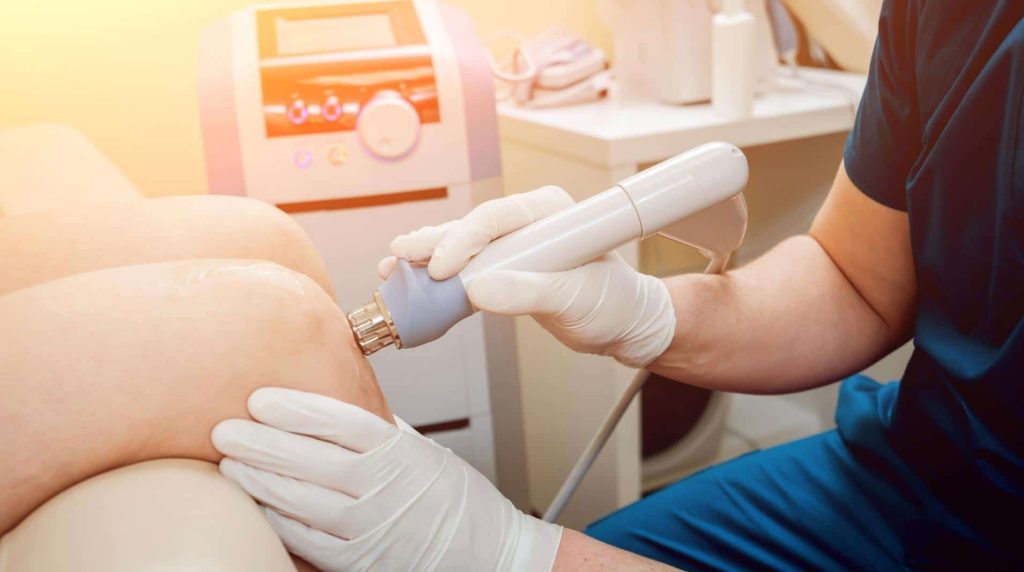
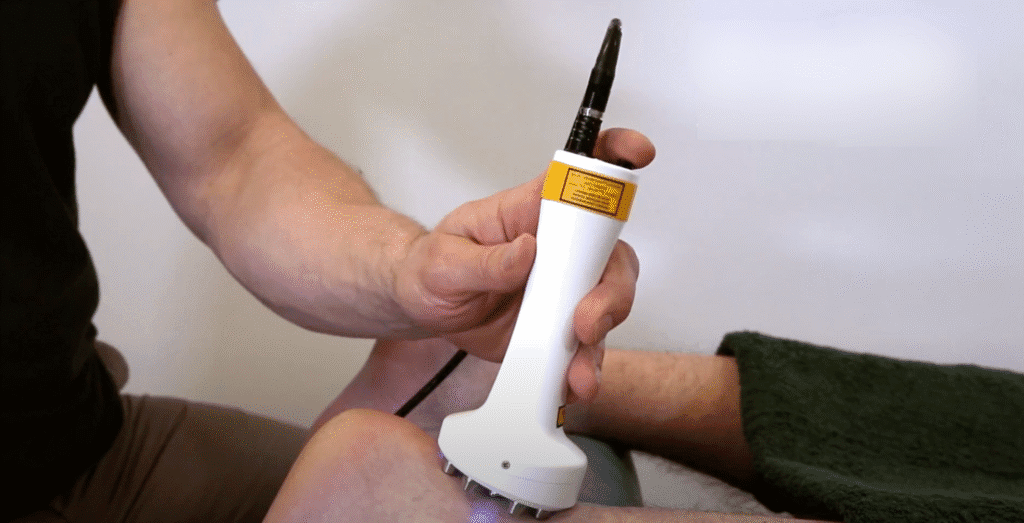
For patients with painful muscle strains, Photobiomodulation Therapy (PBMT), also called Low-Level Laser Therapy (LLLT), may be considered as a drug-free, non-invasive adjunct to clinical management. PBMT uses specific wavelengths of light to interact with cells and support biological processes involved in inflammation modulation, circulation and tissue repair.
Treatment is comfortable and does not involve injections, surgery or heat damage to tissue. It is often considered by people who want to reduce their reliance on medication or who have found that rest and generic self-care have not restored comfortable function.
PBMT is not a substitute for an accurate diagnosis or appropriately graded rehabilitation. Its role depends on the injury, its stage, the patient’s health and the treatment parameters used. Medically supervised care is valuable because the treatment plan can be tailored to the injured tissue, symptoms and response over time, rather than applying a one-size-fits-all approach.
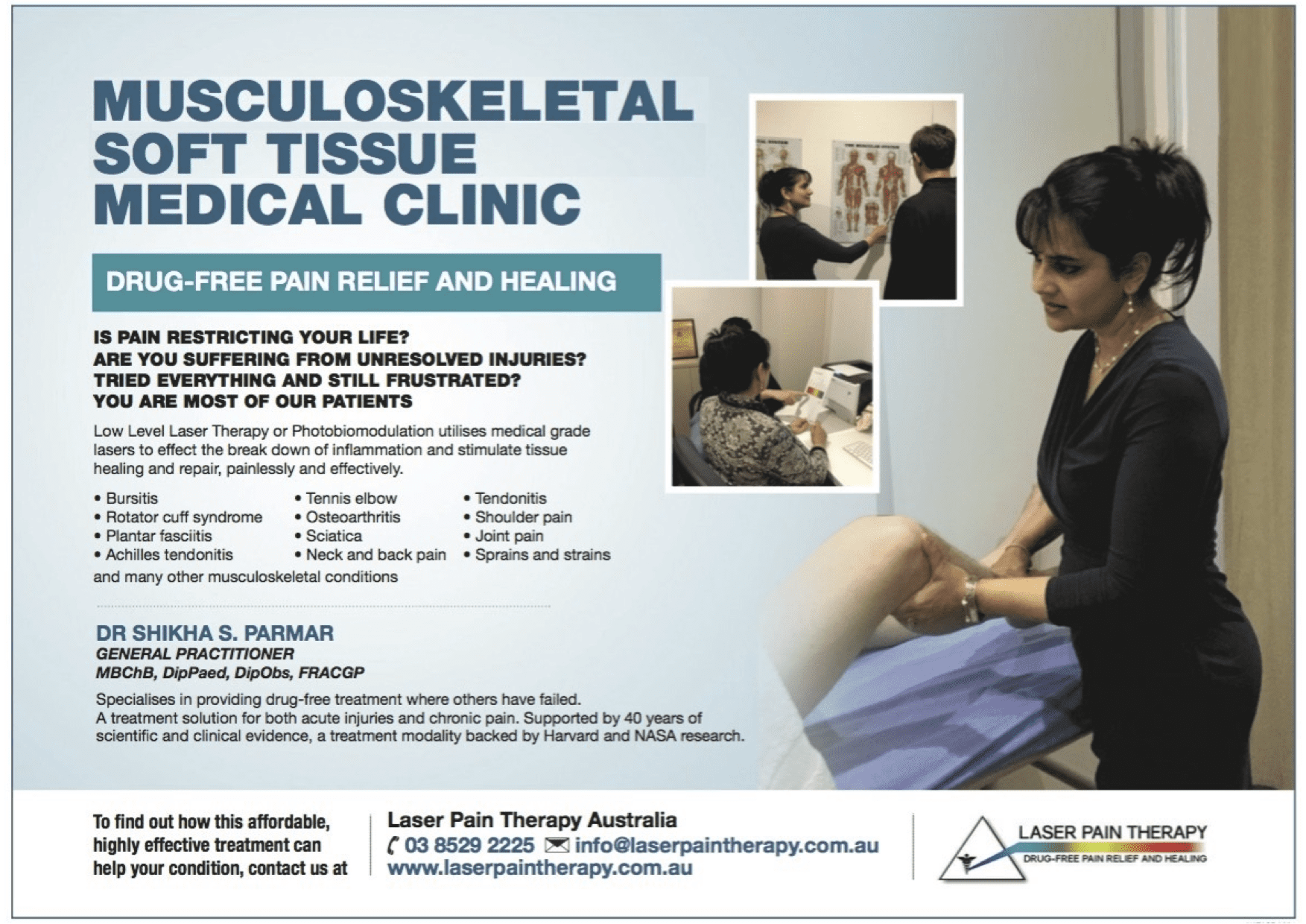
At Laser Pain Therapy, doctor-led assessment and personalised PBMT treatment planning can be used alongside advice on activity modification and recovery progression. This is especially relevant for persistent strains, recurrent soft-tissue injuries and patients seeking a clinically guided, non-pharmaceutical option.
Avoid the setbacks that keep strains recurring
Recurrent strains are often not a sign that a muscle is simply “tight”. They may reflect incomplete recovery, rapid increases in training volume, poor sleep, fatigue, reduced strength, altered movement patterns or an underlying condition affecting the tendon, joint or nerve.
Return to usual activity should be gradual. Before returning to demanding work or sport, you should be able to move through the required range, produce near-normal strength and complete relevant tasks without meaningful pain during or after activity. For a calf strain, that may include repeated calf raises and brisk walking before jogging. For a shoulder strain, it may mean lifting, reaching and carrying without protective guarding.
Warm-ups, sensible workload increases, adequate recovery and strength training all reduce the likelihood of future injuries. They cannot remove risk entirely, but they improve your capacity to manage the forces your everyday life places on the body.
When persistent pain needs a different approach
If a suspected muscle strain has not improved as expected after a few weeks, or repeatedly returns, it deserves reassessment. Persistent pain may indicate a more significant tear, tendon involvement, referred pain from the spine, nerve irritation or an issue with how the area is being loaded.
The most helpful next step is not necessarily more rest. It is a clearer diagnosis and a treatment plan matched to the tissue involved and the function you want to regain. With the right guidance, many people can move from guarding an injury to trusting their body again – one well-timed, well-tolerated step at a time.
Contact us today to arrange your consultation and take the first step towards recovery.
Located in Melbourne
(03) 8529 2225 Contact Us