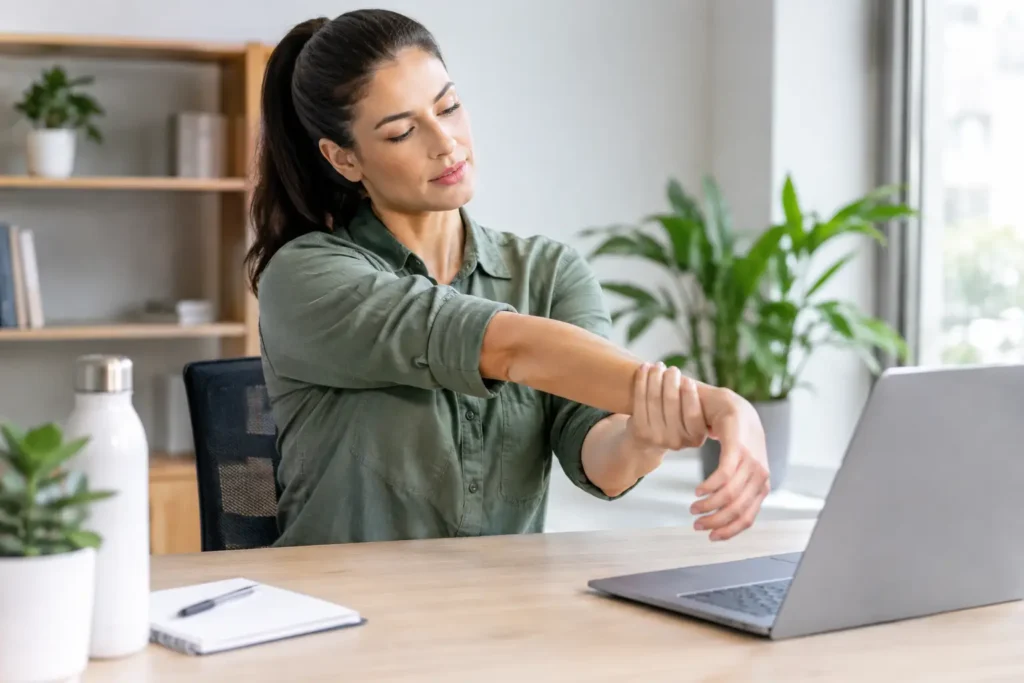
A dull ache in your wrist after a day at the keyboard, a burning forearm when gripping a tool, or shoulder pain that returns every time you lift can be easy to dismiss. Yet repetitive strain often develops gradually, then begins to affect sleep, work, sport and simple daily tasks. Knowing how to manage repetitive strain early can help limit ongoing irritation and support a safer return to normal function.
Repetitive strain injury is not one single diagnosis. It is a broad description for pain and dysfunction caused when a muscle, tendon, joint or nerve is exposed to repeated load without enough recovery. Common examples include tendon irritation around the elbow or wrist, shoulder overuse, neck pain associated with desk work, and hand symptoms related to prolonged gripping, typing or mobile use.
How to manage repetitive strain: start with the load
The first goal is not necessarily complete rest. For many people, stopping all movement for extended periods leads to stiffness, loss of capacity and greater sensitivity when activity resumes. The more useful question is: which activity, position or volume of work is exceeding your tissues’ current tolerance?
Consider the pattern of your symptoms. Does pain build after several hours at a computer? Is it worse after gardening, using hand tools, lifting at work or returning to the gym too quickly? Does it settle overnight, or is it becoming more constant? These details help identify whether the main issue is force, repetition, awkward posture, insufficient recovery, or a combination of all four.
Temporarily reduce the provoking activity to a tolerable level rather than repeatedly pushing through sharp or escalating pain. This may mean shorter blocks of keyboard work, lighter lifting, changing your grip, or modifying training while the irritated area settles. It is not about avoiding use forever. It is about creating enough room for recovery while maintaining comfortable movement.
Improve the task, not just your posture
People are often told to “sit up straight” or buy an ergonomic chair. Equipment can help, but a perfect posture held rigidly for hours is still a sustained load. The most protective posture is usually one you change regularly.
For desk-based work, position the screen so you are not consistently bending your neck, keep frequently used items close, and allow your shoulders to remain relaxed rather than lifted. Your keyboard and mouse should let your wrists stay reasonably neutral, without prolonged reaching or forceful gripping. If your symptoms involve the dominant hand, trialling a different mouse style, keyboard layout or shortcut system may reduce demand on the painful area.
For physical work, small task changes can matter more than a single stretching routine. Use two hands where practical, vary the tool or grip, bring work closer to your body, and break a long repetitive job into shorter stages. An electrician, hairdresser, musician, warehouse worker and parent lifting a toddler may all develop repetitive strain, but their management plans should reflect the activity that is actually driving the problem.
Use movement breaks before pain forces you to stop
Microbreaks are most effective when they occur before symptoms build. A brief change of position every 30 to 45 minutes can reduce sustained tension through the neck, shoulders, forearms and hands. Stand up, walk a short distance, gently open and close the hands, roll the shoulders, or change to a task using different muscle groups.
The aim is not to perform a lengthy exercise session at your desk. It is to interrupt continuous loading. For people with physically demanding jobs, planned rotation between tasks can achieve the same purpose.
Pain is useful information, but it should not be the only guide. A mild increase in discomfort that settles quickly may be acceptable during recovery. Pain that becomes sharp, spreads, causes weakness, or remains significantly worse the following day suggests the activity level may be too high.
Build capacity gradually
Once the most aggravating load is under better control, progressive strengthening is often central to recovery. Tendons, muscles and joints adapt to appropriately dosed load. However, the right exercise depends on the affected structure, the duration of symptoms and whether there is nerve involvement, joint degeneration or an underlying injury.
A generic online programme may be reasonable for minor, short-lived discomfort, but it can be unhelpful when pain has persisted for weeks or months. Overly aggressive stretching, heavy gripping exercises or repeated movements performed through significant pain can aggravate certain conditions.
A clinician can assess movement, strength, tenderness, joint range and neurological symptoms, then recommend a staged plan. This may begin with gentle isometric or range-of-motion work and progress to resistance exercises that reflect the demands of work, hobbies or sport. The appropriate pace varies. Someone returning to tennis will need a different progression from someone managing hand pain while using a computer all day.
Support recovery outside the activity
Recovery is influenced by more than the painful movement itself. Poor sleep, high work demands, stress, reduced general activity and smoking can all affect pain sensitivity and tissue recovery. These factors do not mean that pain is “all in your head”. They are practical contributors that can make an overloaded area harder to settle.
Heat or cold may offer short-term symptom relief for some people, depending on what feels comfortable. A brace, strap or wrist support can also be useful for selected activities, particularly while modifying load. These measures should support a broader plan rather than become the only treatment. Relying on a support while continuing the same aggravating workload often delays lasting improvement.
Over-the-counter pain medicines may be suitable for some people, but they are not appropriate for everyone and can mask the warning signs of overuse. Seek advice from a GP or pharmacist before using medication regularly, especially if you have other health conditions or take prescribed medicines.
When repetitive strain needs medical assessment
Early assessment is sensible when symptoms are not improving after one to two weeks of reasonable activity modification, or when pain repeatedly returns as soon as you resume normal tasks. A clear diagnosis review matters because similar symptoms can have different causes. For example, forearm pain may arise from a tendon problem, neck referral, nerve irritation or arthritis, and each requires a different approach.
Arrange prompt medical review if you notice persistent numbness or tingling, loss of grip strength, marked swelling, a change in skin colour or temperature, pain after a significant injury, or symptoms that disturb sleep. These signs do not always indicate a serious condition, but they warrant proper assessment rather than self-treatment alone.
For persistent musculoskeletal pain, a doctor-led plan can combine diagnosis review, ergonomic and activity advice, rehabilitation, and non-invasive treatment options. Photobiomodulation Therapy, also called low-level laser therapy, may be considered as part of an individualised management plan for suitable tendon, muscle and soft-tissue conditions. This comfortable treatment uses specific wavelengths of light to support cellular processes involved in reducing inflammation and tissue repair. It should be delivered following clinical assessment, with realistic goals for pain reduction and improved function rather than a one-size-fits-all promise.
Prevent the next flare-up
The final stage of managing repetitive strain is preparing for the workload that caused it. When symptoms improve, return to the provoking activity in measured increments. Increase duration, frequency or intensity one variable at a time, allowing several days to see how your body responds. A sudden return to long workdays, weekend DIY projects or previous gym loads is a common reason symptoms recur.
Keep the changes that made the greatest difference, whether that was alternating tasks, adjusting your workstation, strengthening the affected area or taking regular movement breaks. Repetitive strain usually improves when treatment is matched to the cause and recovery is given enough time. The aim is not simply to get through the next painful day, but to restore confidence in the movements your life requires.
Contact us today to arrange your consultation and take the first step towards recovery.
Located in Melbourne
(03) 8529 2225 Contact Us