A painful knee that makes stairs difficult, a shoulder that wakes you at night, or an Achilles tendon that never quite settles can affect far more than movement. For people seeking a drug-free option, understanding LLLT clinical outcomes means looking beyond promises of quick relief and asking a more useful question: what changes can treatment reasonably support in pain, healing and daily function?
Low-Level Laser Therapy, also called Photobiomodulation Therapy or PBMT, is used to support the body’s tissue-repair processes and help manage musculoskeletal pain. It is non-invasive, comfortable and does not involve injections, surgery or medication. However, the quality of the clinical assessment, the condition being treated and the treatment parameters all influence the result.
Understanding LLLT clinical outcomes
PBMT uses specific wavelengths of light delivered to injured or painful tissue. Rather than heating the area like a surgical laser, therapeutic laser light is intended to interact with cells, particularly within the mitochondria that help produce cellular energy. This can influence inflammatory activity, circulation and the processes involved in tissue repair.
In practical terms, the outcomes patients are usually seeking are reduced pain, less swelling or stiffness, improved movement and a better ability to return to work, exercise, sleep and everyday tasks. Some people also aim to reduce their reliance on anti-inflammatory medicines or other pain medication, particularly where side effects or long-term use are concerns.
Clinical research supports PBMT for a range of musculoskeletal conditions, but it should not be presented as a single answer for every type of pain. A recent sporting injury, longstanding osteoarthritis and selected nerve-related musculoskeletal pain may all be treated with laser therapy, yet they have different drivers, recovery timelines and realistic goals. The best outcome is not always complete pain elimination. For chronic conditions, meaningful progress may be walking further, using the arm more comfortably or recovering more reliably after activity.
What changes may occur during treatment?
Pain reduction is often the first change a patient notices. Depending on the condition, this may occur after the first few sessions or build gradually over a treatment course. Acute injuries with inflammation, such as a sprain, muscle strain or tendon overload, may respond relatively quickly when treatment begins early. Longstanding pain commonly requires a more measured approach because reduced mobility, altered movement patterns and tissue degeneration may also be involved.
Improved range of movement can follow as pain and tissue sensitivity settle. For example, a person with neck pain may find they can check their blind spot more easily while driving. Someone with plantar heel pain may take their first steps in the morning with less discomfort. These functional changes matter because they allow appropriate movement and rehabilitation to resume.
For tendon, ligament and soft-tissue injuries, PBMT may support recovery by helping regulate inflammatory processes and cellular repair activity. This does not mean damaged tissue is restored overnight. Tendons in particular are slow-healing structures, and successful care may still require load management, strengthening and changes to training volume or workplace tasks.
LLLT clinical outcomes differ by condition
With osteoarthritis, the focus is commonly pain relief, reduced stiffness and better joint function. Laser therapy cannot reverse established joint degeneration or regrow cartilage. It may, however, help some patients manage symptoms more comfortably and remain active, which is an important part of maintaining joint health.
For repetitive strain injuries, such as tennis elbow, shoulder impingement-related pain or wrist and hand overuse, outcomes depend partly on whether the original aggravating factor is addressed. Treating inflamed tissue while a workstation, grip technique or workload continues to overload it can limit progress. Laser therapy is most useful when it forms part of a plan that also considers the source of repeated strain.
Sports injuries often have clearer short-term goals: settling pain, restoring movement, tolerating progressive loading and returning to training safely. A runner with calf pain, for instance, may feel better before the tissue is ready for high-speed running. Medical guidance helps distinguish early symptom improvement from genuine readiness to return to full activity.
Nerve-related symptoms require particular care. PBMT may be considered for selected musculoskeletal presentations involving local nerve irritation, but Laser Pain Therapy does not treat generalised or systemic peripheral neuropathy. Numbness, progressive weakness, changes in bladder or bowel control, unexplained symptoms or severe radiating pain require prompt medical assessment. Laser therapy should never delay investigation of a potentially serious cause.
Why some patients respond better than others
The dose matters. PBMT is not simply a matter of applying a laser to the painful area. Wavelength, power, energy dose, treatment time, tissue depth and the size of the area being treated all need to be selected appropriately. Under-dosing may have little effect, while a generic approach may miss the structures actually contributing to pain.
Accurate diagnosis review also matters. Pain felt in the shoulder may originate from the neck. Hip pain may be referred from the lower back. Persistent knee pain may coexist with weakness, altered gait or joint changes that need consideration. A doctor-led assessment can identify when PBMT is appropriate, when other management is needed and when imaging, pathology or specialist referral should be considered.
Individual health factors can influence recovery. Age, sleep, smoking, diabetes, circulation, stress, nutrition, medications and the duration of symptoms all play a role. This is not a reason to assume improvement is out of reach. It is a reason to set treatment goals that reflect the whole person rather than treating pain as an isolated problem.
What a medically guided course of PBMT involves
Treatment begins with a consultation and review of the history, symptoms, functional limitations and any prior investigations. The clinician considers the likely pain source, checks for contraindications or red flags, and discusses whether laser therapy suits the condition and the patient’s goals.
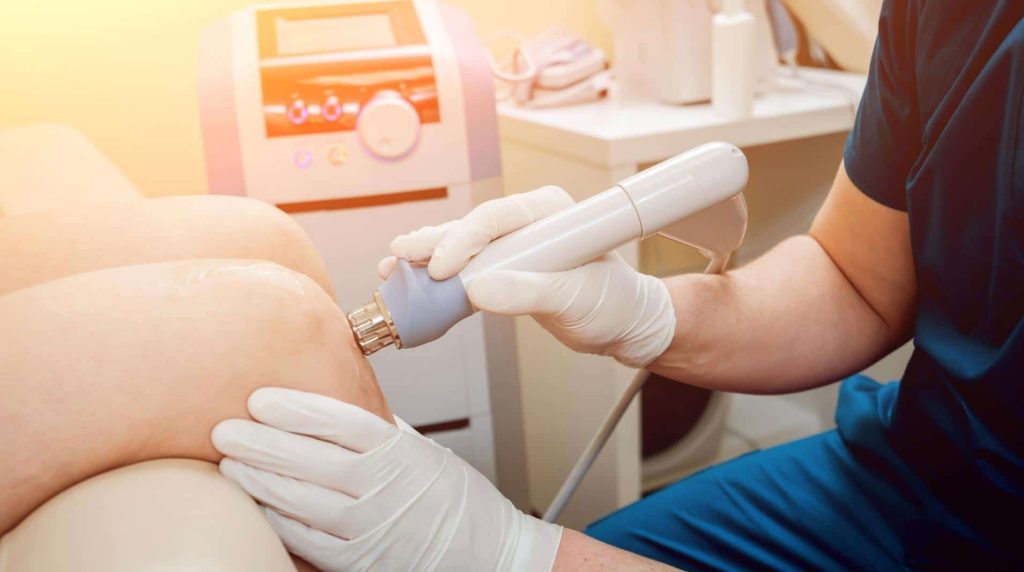
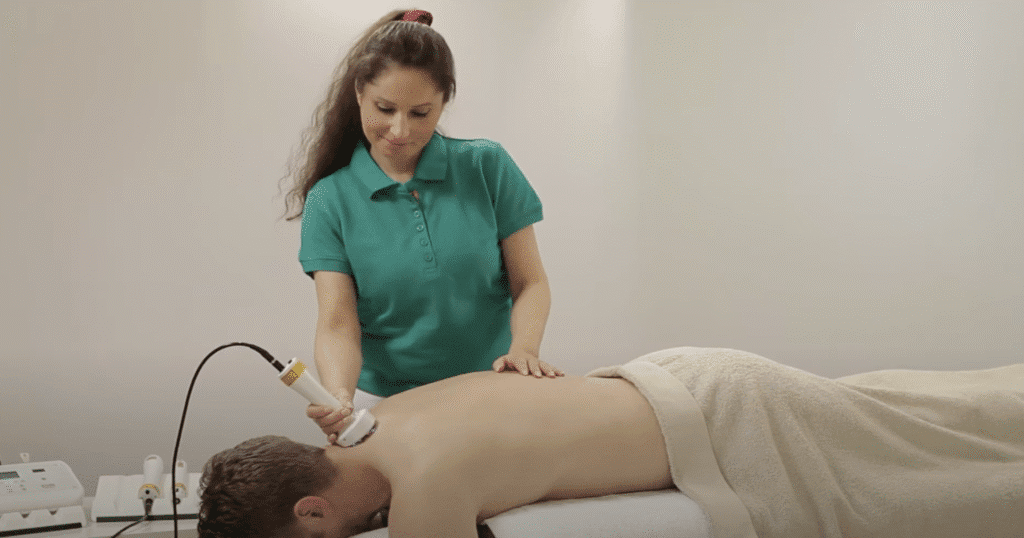
During treatment, the laser applicator is placed over the relevant area for a prescribed time. Patients generally feel little or no sensation, although some may notice mild warmth depending on the device and treatment area. Sessions are comfortable and there is no recovery period, so patients can usually return to normal activities afterwards, subject to advice for their injury.
A treatment plan may involve several sessions, particularly for chronic pain or deeper structures. Progress should be reviewed rather than assumed. Useful measures include pain during a specific activity, walking tolerance, sleep disruption, joint movement, strength or the ability to complete work and household tasks. If there is no meaningful response after an appropriate trial, the plan should be reconsidered.
Safety, limits and realistic expectations
PBMT has a strong safety profile when delivered by trained clinicians using suitable equipment and protocols. Eye protection is used where required, and treatment is adjusted to the person’s presentation. Even so, it is not appropriate to treat every painful area without assessment. Unexplained pain, suspected fracture, infection, malignancy, significant trauma or systemic illness need medical evaluation first.
PBMT also works best as part of well-directed care rather than a substitute for every other intervention. Some patients benefit from combining laser therapy with progressive exercise, mobility work, ergonomic changes, weight management, footwear advice or treatment for contributing medical conditions. Others may need different care entirely. The value of a clinical plan lies in choosing the least invasive approach that still addresses the problem properly.
For patients in Melbourne who are tired of cycling through medication, temporary fixes or uncertainty, Laser Pain Therapy provides medically supervised PBMT with outcomes assessed against real-life function. The right goal is not simply to have less pain on the treatment table, but to move with more confidence in the life you want to return to.
Contact us today to arrange your consultation and take the first step towards recovery.
Located in Melbourne
(03) 8529 2225 Contact Us