
A sore Achilles that has lingered for months, a painful heel on the first steps of the morning, or a shoulder that will not settle can make any treatment promising quick relief sound appealing. But LLLT versus shockwave therapy is not simply a choice between two machines. They use very different forms of energy, suit different clinical presentations, and should be selected after a proper review of the diagnosis, tissue involved and stage of healing.
Both treatments are drug-free and non-invasive. Neither is a substitute for identifying why pain is persisting. The most appropriate option depends on whether the issue is an acute injury, chronic tendon pain, joint degeneration, nerve irritation or another musculoskeletal condition.
What is low-level laser therapy?
Low-Level Laser Therapy, also called Photobiomodulation Therapy or PBMT, delivers specific wavelengths of red and near-infrared light to targeted tissue. The light is absorbed by cells and is intended to support cellular energy production, modulate inflammation and assist the body’s tissue-repair processes.
Unlike surgical lasers, PBMT does not cut, burn or ablate tissue. Treatment is comfortable. Depending on the device and treatment area, a patient may feel little more than the contact of the treatment probe and, occasionally, gentle warmth.
PBMT is used across a broad range of acute and chronic musculoskeletal presentations. These may include tendon and ligament injuries, muscle strains, osteoarthritis-related joint pain, neck and back pain, repetitive strain conditions, soft-tissue inflammation and some forms of nerve-related pain. Its role is not to mask pain temporarily. A well-designed treatment plan aims to reduce inflammatory activity, support healing and improve movement and day-to-day function.
The dose matters. Wavelength, power, treatment time, tissue depth and the location of the painful structure all influence treatment delivery. This is why medically guided assessment is more valuable than a generic, one-size-fits-all laser session.
What is shockwave therapy?
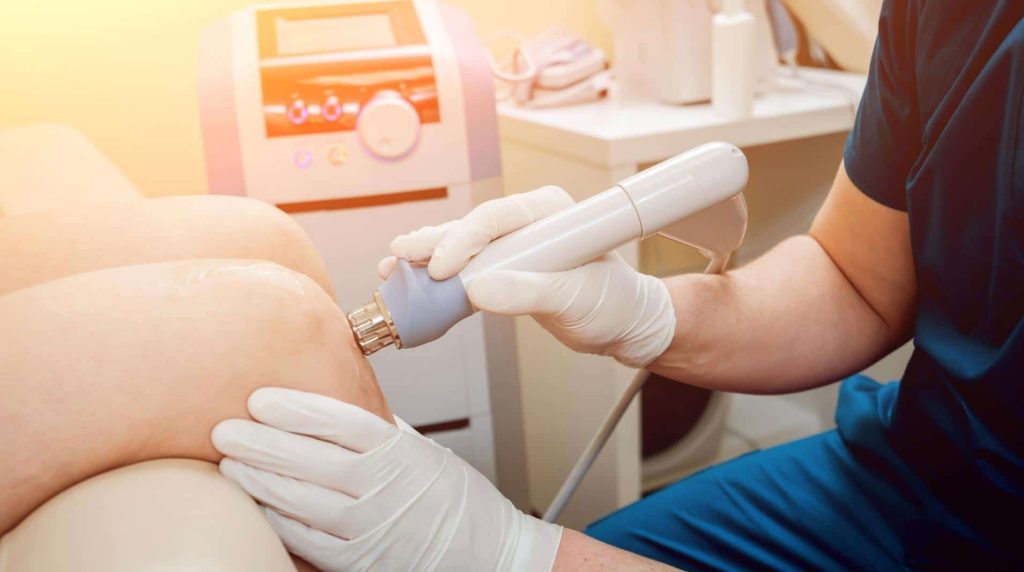
Shockwave therapy, usually referred to as extracorporeal shockwave therapy or ESWT, delivers acoustic pressure waves into tissue. It is most commonly used for persistent tendon disorders and certain calcific conditions. There are focused and radial forms of shockwave therapy, which differ in the way energy is delivered and the depth they can reach.
Shockwave treatment is often considered when a tendon problem has become chronic and has not responded adequately to load modification, exercise-based rehabilitation or other conservative care. Common examples include plantar fasciopathy, Achilles tendinopathy, tennis elbow, patellar tendinopathy and calcific tendinopathy of the shoulder.
The proposed effect is different from PBMT. Shockwave therapy creates a mechanical stimulus in the affected area, which may influence pain signalling, local circulation and tissue remodelling. For calcific shoulder tendinopathy, it may also be used as part of a strategy to address calcium deposits.
Treatment can be uncomfortable, particularly over tender tendons or bony areas. The intensity can usually be adjusted, but discomfort during the session is more common than with low-level laser therapy. Mild local soreness, redness or bruising may occur afterwards, and some people have a short-lived pain flare before improvement develops.
LLLT versus shockwave therapy: key clinical differences
The most practical difference is that PBMT is a light-based biological treatment, while shockwave therapy is a mechanical acoustic treatment. That distinction affects comfort, treatment selection and what a clinician is trying to achieve.
Low-level laser therapy is usually the more comfortable option. It can be appropriate where pain is highly irritable, where a recent injury needs a gentle approach, or where treatment needs to cover multiple regions such as surrounding muscles, ligaments and joints. It is also commonly incorporated into plans for chronic pain where inflammation, restricted movement and reduced tissue tolerance are all contributing factors.
Shockwave therapy is more condition-specific. Its strongest clinical role is generally in selected, long-standing tendinopathies and calcific shoulder pain. It is not automatically the best treatment for every tendon problem, particularly if the diagnosis is uncertain, the tendon is acutely inflamed, or the person is unable to tolerate the pressure waves.
Improvement timelines also differ. Some people notice reduced pain or easier movement after PBMT sessions, although meaningful recovery often requires a course of treatment and attention to aggravating activities. Shockwave therapy is commonly delivered over several sessions, with improvement sometimes emerging gradually over the following weeks as tissue response and rehabilitation progress.
Neither treatment should be judged only by how it feels on the day. A temporarily painful shockwave session is not proof that it is working, just as a painless laser session is not evidence of a weaker treatment. The relevant measures are pain during meaningful activity, range of movement, strength, sleep, walking tolerance and the ability to return to work, sport or household tasks.
Which conditions may suit each treatment?
For broad soft-tissue pain, joint pain and inflammatory presentations, PBMT may be a useful first-line non-invasive option. This can include an ankle sprain, knee osteoarthritis, rotator cuff-related shoulder pain, neck pain from sustained desk work, or a muscle injury where the aim is to support recovery without adding mechanical irritation.
For a clearly diagnosed chronic tendon disorder, shockwave may be considered. A person with plantar heel pain for many months, for example, may benefit from shockwave as part of a plan that also addresses footwear, calf strength, foot loading and activity levels. For tendinopathy, treatment without progressive loading and rehabilitation is less likely to deliver sustained results.
There is also overlap. A patient with chronic Achilles pain may have tendon changes, calf tightness and compensatory pain in the foot or lower back. In that situation, a clinician may consider PBMT for pain modulation and associated soft tissue, shockwave for the tendon itself, or neither until a more pressing issue has been excluded. Combination care can be appropriate, but it should have a clear clinical rationale rather than being offered as an automatic package.
Safety, screening and realistic expectations
Both treatments are generally well tolerated when delivered appropriately, but suitability must be assessed individually. With PBMT, the clinician should review factors such as the treatment site and relevant medical history. With shockwave, precautions may apply for bleeding disorders, anticoagulant medication, local infection, a suspected fracture, pregnancy when treating the relevant region, and certain growth plate considerations in younger patients.
Persistent pain also deserves careful diagnosis review. Not all heel pain is plantar fasciopathy, not all shoulder pain is a tendon problem, and not all nerve symptoms are caused by tight muscles. New weakness, significant swelling, unexplained weight loss, fever, trauma, pain that wakes you consistently at night, or changes in bladder or bowel function require timely medical assessment.
Evidence for both therapies is condition-dependent. Research findings vary according to the diagnosis, treatment parameters, chronicity of symptoms and whether treatment is paired with appropriate rehabilitation. A responsible clinician should explain what the evidence supports for your specific condition, what improvement is realistic and when another approach may be more appropriate.
Choosing the right treatment plan
The better question is not, “Which treatment is best?” It is, “What is driving my pain, and what will give this tissue the best chance to recover?” For some people, that will be low-level laser therapy because comfort, inflammation reduction and support for soft-tissue healing are priorities. For others with a persistent, well-defined tendinopathy, shockwave therapy may be a reasonable option.
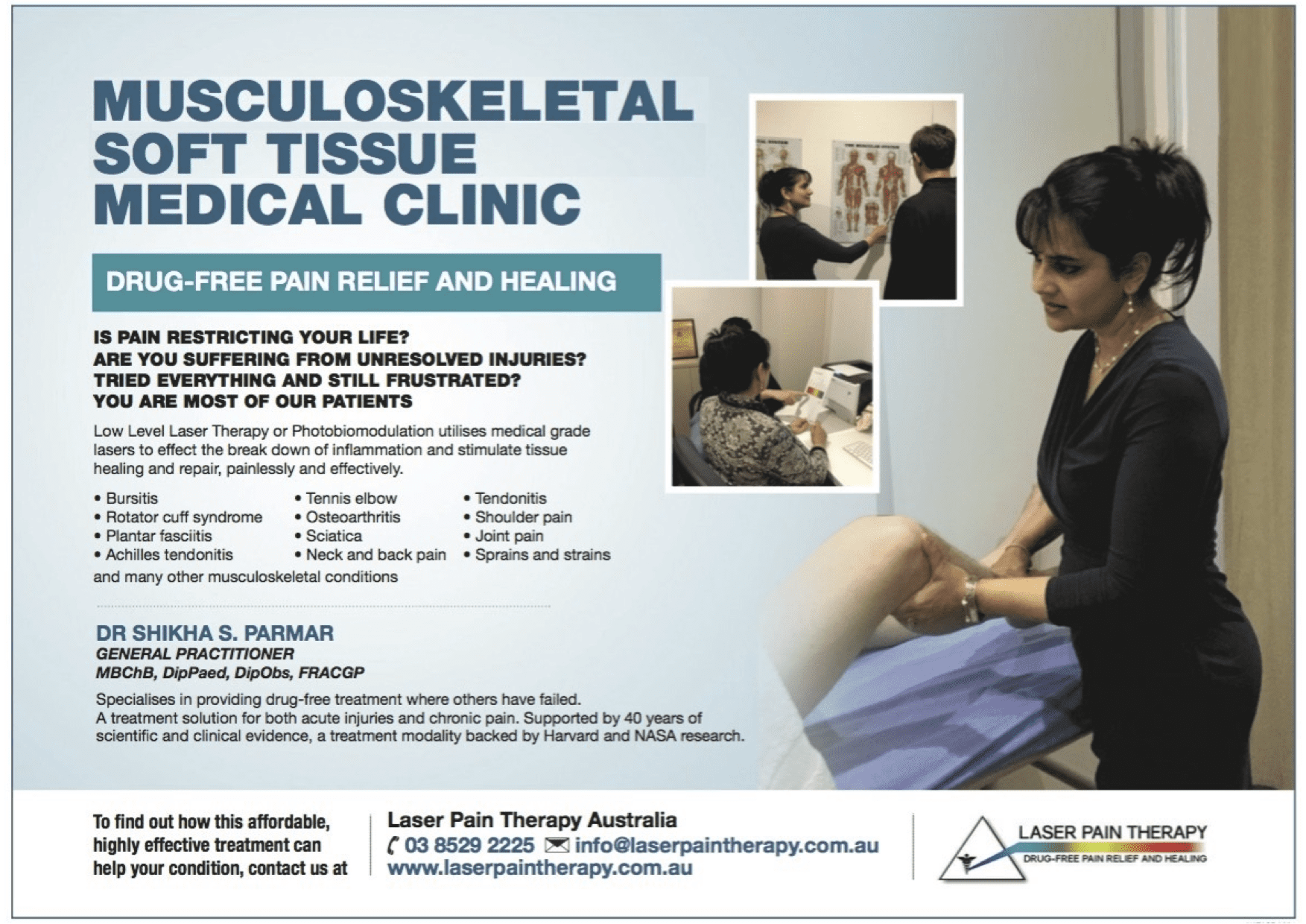
At Laser Pain Therapy, treatment planning begins with a medically supervised consultation and diagnosis review rather than a pre-set protocol. That allows PBMT to be matched to the painful tissue, your health history and your functional goals, while identifying when exercise rehabilitation, imaging, medication review, shockwave therapy or referral should be considered.
The right plan is one that supports appropriate movement, restores confidence in the affected area and gives you a practical path back to the activities that matter to you.
Contact us today to arrange your consultation and take the first step towards recovery.
Located in Melbourne
(03) 8529 2225 Contact Us