A swollen knee that remains stiff weeks after an injury, a tendon that flares each time you return to activity, or a sore neck that never quite settles can all have inflammation in common. Understanding how photobiomodulation reduces inflammation helps explain why this non-invasive treatment can be useful for people living with acute injury, persistent musculoskeletal pain and degenerative joint conditions.
Photobiomodulation Therapy (PBMT), also known as Low-Level Laser Therapy (LLLT), uses specific wavelengths of therapeutic light to influence cellular activity. It does not heat, cut or inject tissue. Instead, carefully selected light energy is delivered to the affected area to support the body’s own repair processes, with the aim of reducing pain, calming inflammation and improving function.
Inflammation is helpful – until it lingers
Inflammation is not automatically a problem. It is a normal biological response to injury, overuse or irritation. In the early stages of a sprain, muscle strain or tendon injury, blood flow and immune activity increase. This brings cells and chemical signals needed for repair into the area.
The difficulty arises when the inflammatory response is excessive, poorly resolved or repeatedly triggered. Ongoing inflammation can contribute to swelling, sensitivity, stiffness and reduced movement. In chronic conditions, including some forms of osteoarthritis, tendinopathy and persistent back or neck pain, inflammation may be one part of a more complex cycle involving tissue overload, altered movement patterns and sensitised nerves.
PBMT is not designed to simply suppress every inflammatory response. The clinical goal is to help regulate an inflammatory process that is contributing to pain or delayed recovery, while supporting healthy tissue repair.
How photobiomodulation reduces inflammation at a cellular level
PBMT works through a process called photobiomodulation. When therapeutic laser light reaches target tissues, it is absorbed by light-sensitive molecules within cells, particularly in the mitochondria. Mitochondria produce adenosine triphosphate, or ATP, the energy cells use to carry out essential functions.
Research suggests that appropriately dosed light can influence mitochondrial activity and cellular signalling. This may improve energy availability in damaged or stressed cells and help regulate oxidative stress. These changes can affect the chemical messengers involved in inflammation, pain perception and tissue repair.
One proposed effect is improved production of nitric oxide, a molecule involved in blood vessel function and circulation. Better local microcirculation may assist oxygen delivery and removal of metabolic by-products from affected tissue. For a painful tendon, stiff joint or injured muscle, this can support an environment more favourable to recovery.
PBMT may also influence inflammatory mediators, including cytokines. Cytokines are proteins that help coordinate immune responses. In persistent inflammation, certain pro-inflammatory cytokines can remain elevated and continue to drive soreness and tissue sensitivity. Therapeutic light may help shift this signalling towards a more balanced response, reducing excessive inflammatory activity without relying on medication.
These biological effects do not mean that laser treatment is a cure for every painful condition. The response depends on the diagnosis, the chronicity of the problem, the tissue involved and whether the area is still being overloaded. That is why a proper clinical assessment matters.
Reducing swelling and tissue pressure
After injury, fluid can accumulate in and around damaged tissues. This swelling may limit range of motion and increase pressure on sensitive structures. PBMT can support local circulation and lymphatic flow, which may assist the body’s management of excess fluid.
For some people, reduced swelling translates into easier movement and less discomfort. This is particularly relevant after soft-tissue injuries, joint irritation and repetitive strain problems. It should not, however, replace urgent assessment where swelling is severe, sudden, associated with fever, deformity, loss of function or unexplained calf pain.
Helping painful nerves become less reactive
Inflammation and pain often reinforce each other. Inflamed tissue releases chemical signals that sensitise nearby nerve endings. As sensitivity rises, movements or loads that would normally be manageable can become painful.
PBMT may help reduce this peripheral sensitivity by moderating inflammatory signalling and influencing nerve function. Some patients notice that pain settles before they feel a major change in strength or movement. This can create an opportunity to gradually restore mobility, build capacity and return to everyday activities with more confidence.
Inflammation control is only part of recovery
Pain relief is valuable, but lasting improvement usually requires more than a reduction in symptoms. A tendon that became painful because of repeated overload may need a measured strengthening programme. Knee pain related to osteoarthritis may improve with activity modification, targeted exercise and weight management where appropriate. A neck problem associated with prolonged desk work may also require changes to posture, workstation setup and movement habits.
PBMT can be an effective part of this wider plan because it aims to reduce pain and inflammation while supporting tissue repair. When symptoms are more manageable, people are often better able to participate in rehabilitation rather than avoiding movement altogether.
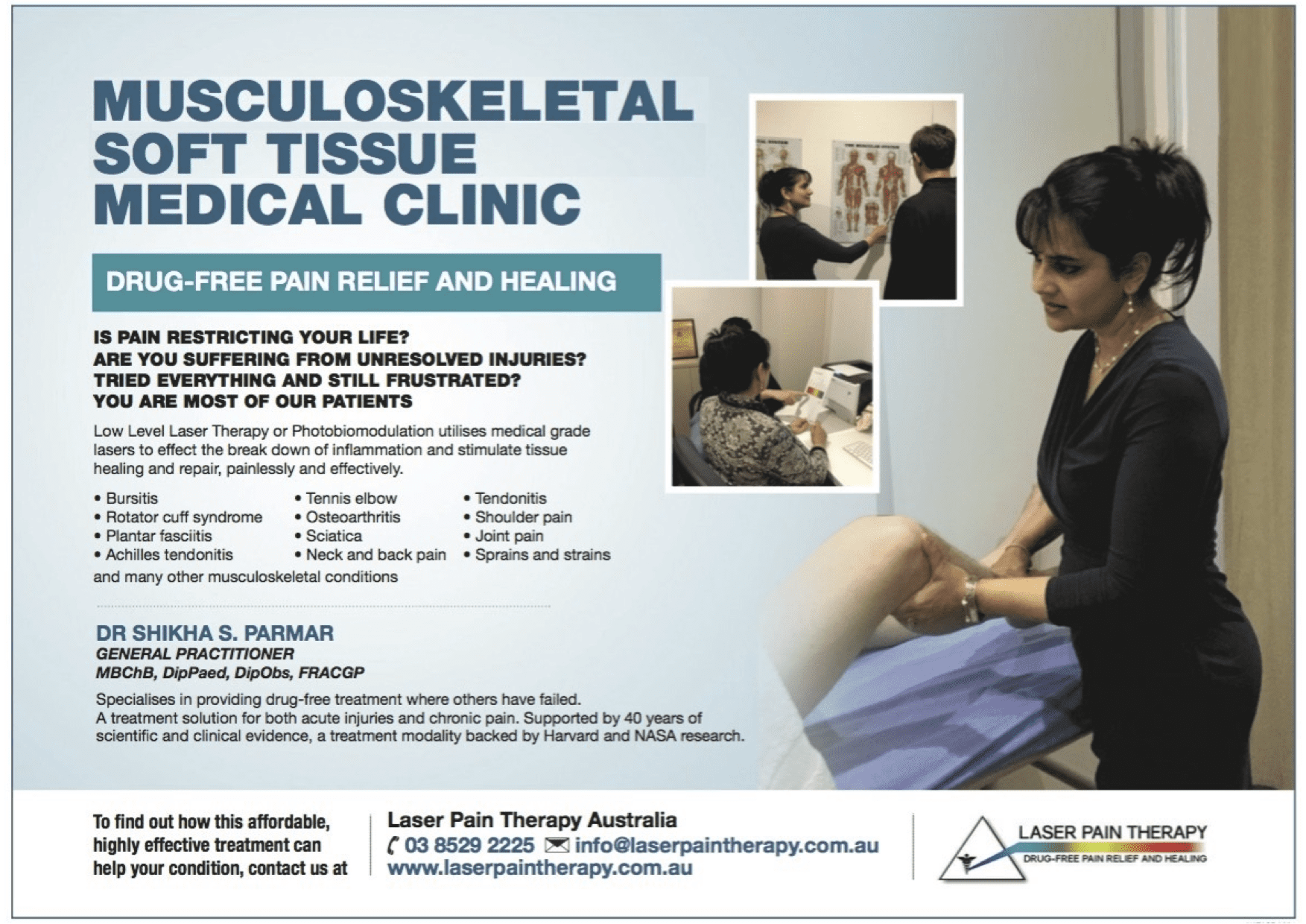
At Laser Pain Therapy, treatment planning is medically supervised and based on an assessment of the condition, health history and functional goals. This approach is particularly useful when pain has persisted despite rest, medication or standard treatments, or when the diagnosis needs review before a treatment pathway is chosen.
What a PBMT treatment feels like
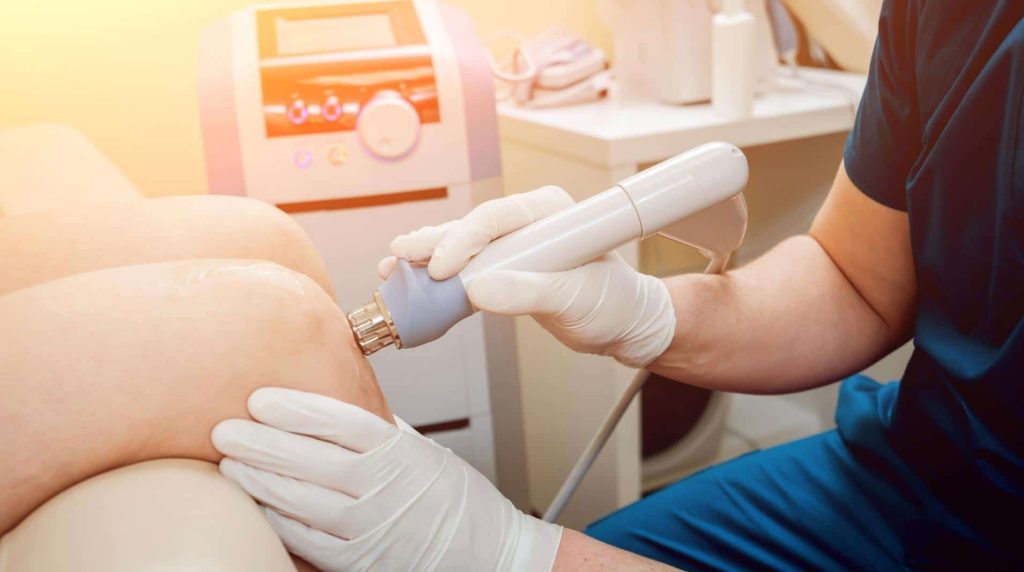
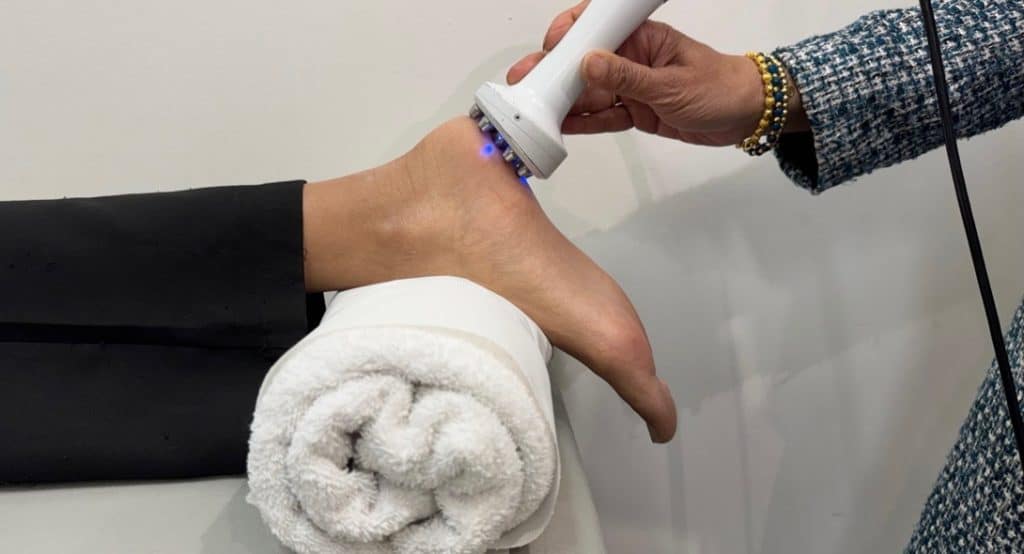
Laser therapy is comfortable. The treatment device is applied to the skin over the relevant area, with the wavelength, dose and treatment points selected according to the tissue and condition being treated. Sessions are usually brief, although the duration varies with the size and depth of the area.
Unlike a hot pack or massage, PBMT may produce little or no sensation during treatment. The absence of a strong sensation does not indicate that nothing is happening. Therapeutic laser parameters are designed to deliver light energy at a specific dose, not to create heat.
Some acute conditions respond quickly, particularly when treatment begins soon after an injury. Chronic pain often requires a course of care because long-standing inflammation, tissue changes and reduced function rarely resolve after a single session. Progress should be judged by meaningful measures such as pain levels, swelling, range of motion, sleep, walking tolerance and ability to perform daily tasks.
Is photobiomodulation suitable for everyone?
PBMT is a drug-free, non-invasive option that can be suitable for adults, older people and, in appropriately selected circumstances, children and young people with injuries. It can be especially appealing to patients seeking to reduce their reliance on anti-inflammatory medicines or pain medication. However, suitability should always be assessed individually.
A clinician needs to consider the source of pain, current medications, relevant medical conditions and any red flags. Pain that is worsening without explanation, follows significant trauma, occurs with neurological changes, or is accompanied by systemic symptoms requires appropriate medical investigation. Laser therapy should complement sound diagnosis, not delay it.
There are also practical trade-offs. PBMT is not a substitute for surgery where a structural problem clearly requires surgical management, nor can it reverse advanced joint degeneration. Its role is to support inflammation control, pain reduction and function in a way that is tailored to the person and condition.
A measured approach to inflammation and pain
Inflammation is a biological process, not a diagnosis. The most effective care starts by identifying what is driving it: a recent injury, repetitive loading, joint degeneration, nerve irritation or another underlying cause. From there, PBMT can be used as part of an individualised plan to calm symptoms and support recovery without injections, surgery or routine reliance on pharmaceuticals.
If pain is preventing you from moving normally, sleeping well or returning to the activities that matter to you, a medically guided assessment can clarify whether photobiomodulation is an appropriate next step. The aim is not simply to mask discomfort, but to create the conditions for safer movement, better function and sustained recovery.
Contact us today to arrange your consultation and take the first step towards recovery.
Located in Melbourne
(03) 8529 2225 Contact Us