A sharp electric pain down the leg, burning or tingling into an arm, or pain that follows a recognisable nerve pathway can feel very different from a typical muscle ache. This guide focuses on nerve-related musculoskeletal pain: symptoms arising from local nerve irritation, spinal or joint problems, soft-tissue injury or other musculoskeletal causes. A medically guided plan can help clarify the source of the pain and support recovery without relying solely on medication.
Nerve-related musculoskeletal pain occurs when a nerve is irritated, compressed or sensitised by a local mechanical or inflammatory problem. The pain is real, even when scans do not show dramatic damage and the affected area may look normal from the outside. The important question is not simply whether pain feels “neuropathic”, but what is causing the nerve to become irritated and whether that cause is appropriate for musculoskeletal treatment.
What nerve-related musculoskeletal pain feels like
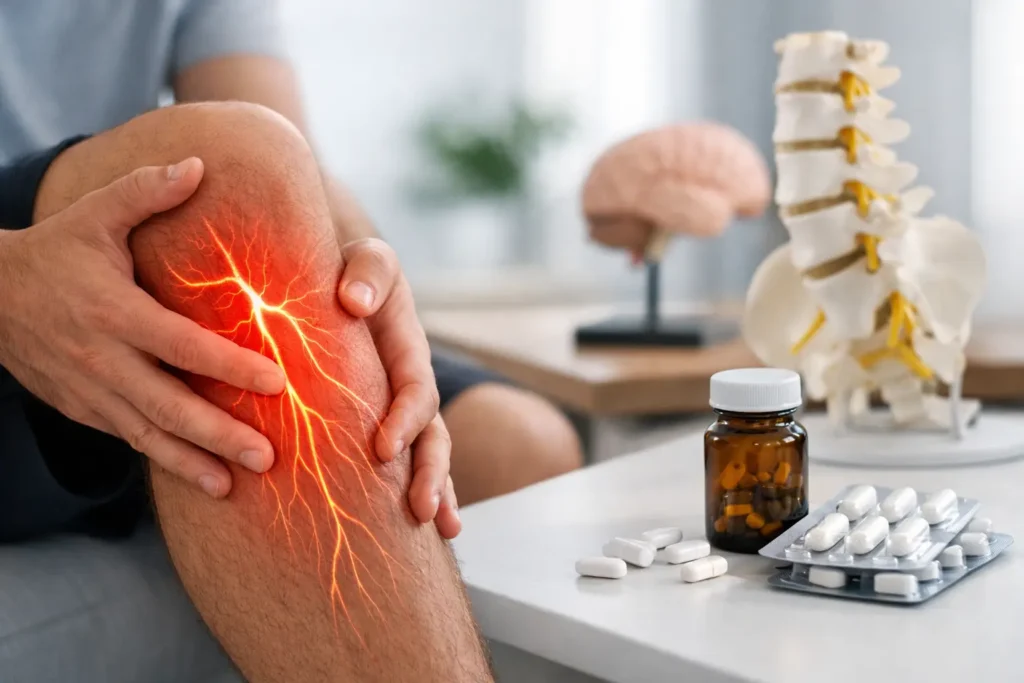
Nerves carry signals between the body and brain. When a nerve is irritated or sensitised, ordinary signals can become painful or exaggerated. This may happen when a spinal nerve is affected by disc-related change, joint degeneration or local inflammation, or when a peripheral nerve is irritated by surrounding musculoskeletal structures.
People may describe the pain as burning, stabbing, shooting, tingling, prickling, buzzing, numb or like an electric shock. Symptoms can be constant or intermittent and may change with posture, walking, repetitive activity or sleep. Pain can travel along a recognisable path, such as from the lower back into the buttock and leg, or from the neck into the shoulder, arm and hand.
Altered sensation can also occur. You may notice numbness, pins and needles, heightened sensitivity to touch or a sense that the affected limb is not moving normally. Weakness, clumsiness or changes in balance deserve particular attention because they may indicate more significant nerve involvement.
Common musculoskeletal causes of nerve pain
Nerve pain is a symptom pattern, not a diagnosis on its own. Identifying the underlying cause guides the most appropriate treatment and helps avoid treating pain in isolation.
A compressed or irritated spinal nerve is a common musculoskeletal cause. A disc bulge, spinal narrowing, joint degeneration or local inflammation can contribute to sciatica-like leg pain or pain radiating into an arm. Nerve irritation can also occur away from the spine, including around the wrist, elbow, hip, knee or ankle where surrounding tissues may place pressure on or irritate a nerve.
Nerves can also become painful after trauma, fractures, repetitive strain, surgery or sporting injuries when local swelling, scar tissue, altered movement or soft-tissue dysfunction affects the nerve. By contrast, peripheral neuropathies caused by conditions such as diabetes, vitamin deficiency, shingles, thyroid disease or systemic neurological disorders require different medical management and are not the treatment focus at Laser Pain Therapy.
This is why two people with similar scan findings can experience very different pain levels. Imaging is valuable when clinically indicated, but it is only one part of the picture. Symptoms, physical examination, medical history, function and any relevant test results all matter.
When nerve pain needs urgent assessment
Most nerve-related musculoskeletal pain can be assessed through a planned medical consultation, but some symptoms require prompt attention. Seek urgent medical care for new or worsening limb weakness, loss of bladder or bowel control, numbness around the groin or inner thighs, sudden difficulty walking, or severe pain following significant trauma.
Rapidly progressing numbness, unexplained weight loss, fever, a history of cancer, or severe pain that is constant and unrelenting should also be medically assessed without delay. These symptoms do not always signal a serious cause, but they should not be managed by self-treatment alone.
How nerve-related musculoskeletal pain is assessed
A useful assessment begins with the story of the pain. When did it start? What does it feel like? Does coughing, sitting, reaching, walking or sleeping change it? Has there been an injury, repetitive strain, spinal problem, surgery or change in activity? These details help distinguish local nerve irritation from pain arising primarily from muscles, joints, tendons or other medical causes.
A clinician may then assess spinal and joint movement, muscle strength, reflexes, balance and areas of altered sensation. Depending on the presentation, imaging, blood tests or nerve conduction studies may be appropriate. More testing is not automatically better; investigations should be guided by the clinical findings and whether the result is likely to change management.
A diagnosis review is particularly valuable when pain has continued despite treatment, symptoms do not fit an earlier diagnosis, or medication is providing incomplete relief. A personalised plan should address the suspected source of nerve irritation, the surrounding musculoskeletal contributors and the practical limitations pain has created in daily life.
Nerve-related musculoskeletal pain: treatment options that work together
There is rarely one universal treatment for nerve-related pain. The best approach depends on the cause, duration, severity, medical history and the goals that matter most to the individual. For one person, the priority may be walking comfortably again. For another, it may be sleeping through the night, returning to work or lifting without provoking radiating pain.
Medication can be useful for some people, particularly during severe symptoms or while the underlying cause is being investigated. Certain medicines are prescribed specifically for nerve-related pain rather than standard pain relief. Their usefulness varies, and side effects such as drowsiness, dizziness, dry mouth or cognitive slowing may limit suitability for some patients.
Movement-based rehabilitation often remains important, but it needs to be paced appropriately. Complete rest can lead to deconditioning, while repeatedly pushing through intense radiating pain can aggravate an irritable nerve. A gradual plan may include mobility work, strength restoration, ergonomic changes, activity modification and confidence-building movement within tolerable limits.
When there is ongoing mechanical compression, progressive neurological deficit or another structural problem requiring specialist care, referral or procedural treatment may be necessary. Non-surgical treatment can be appropriate in many cases, but it should never delay investigation where surgery or urgent intervention may be indicated.
The role of photobiomodulation therapy
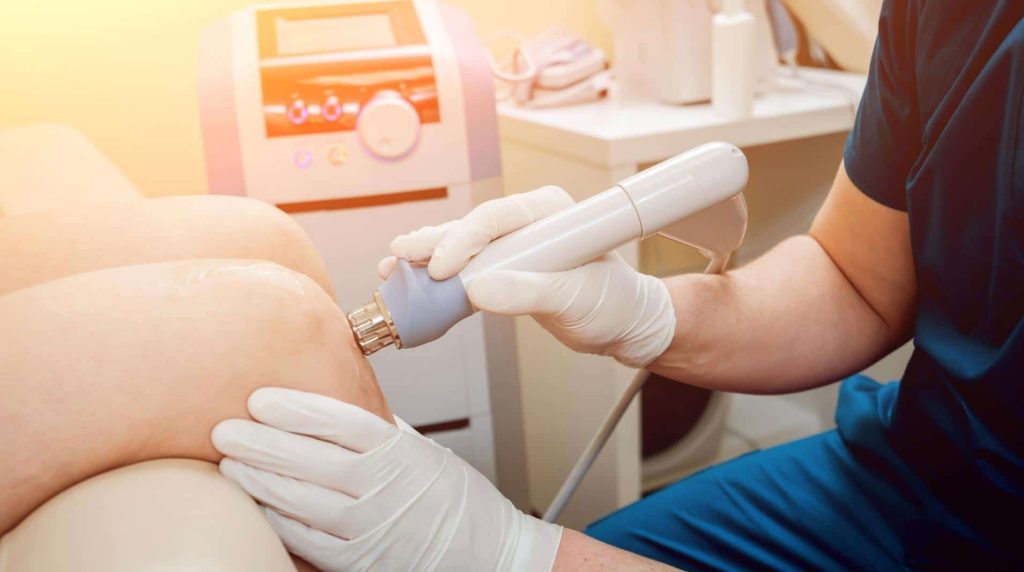
Photobiomodulation Therapy, also known as Low-Level Laser Therapy, is a non-invasive treatment that uses specific wavelengths of light to support cellular processes involved in tissue repair, inflammation regulation and pain modulation. At Laser Pain Therapy, PBMT may be considered for selected musculoskeletal presentations where nerve symptoms coexist with local inflammation, soft-tissue injury, joint dysfunction, spinal pain or mechanical nerve irritation.
Treatment is comfortable and does not involve injections, medication or surgery. Treatment parameters are selected according to the area being treated, the suspected tissue involvement, symptom duration and the person’s medical history. Proper assessment is important because radiating or burning pain can arise from many different causes, and not every neuropathic presentation is suitable for PBMT.
PBMT is not offered as a treatment for generalised or systemic peripheral neuropathy. Its role in our clinic is more specific: supporting selected local musculoskeletal conditions in which nerve irritation forms part of the pain presentation. It is also not a substitute for urgent neurological care, diabetes management, treatment of infection or surgical assessment where these are required.
What you can do while seeking care
Avoid repeatedly testing the painful area to see whether it still hurts. Constant stretching, forceful massage or aggressive exercise can keep an irritated nerve provoked. Instead, notice the positions and activities that reliably trigger symptoms and use that information to modify them temporarily.
Gentle, regular movement is often better tolerated than long periods in one position. If sitting worsens leg symptoms, brief standing or walking breaks may help. If neck and arm symptoms flare with desk work, review screen height, chair support and how often you change position. These adjustments are not a cure, but they can reduce unnecessary aggravation while a treatment plan is developed.
Sleep deserves attention too. Nerve-related pain can be worse at night, and poor sleep may lower pain tolerance the next day. A consistent sleep routine, comfortable positioning and avoiding prolonged pressure on the affected area may help. If pain is regularly disrupting sleep, mention this during your consultation because it is a meaningful measure of symptom severity.
Recovery is measured by more than pain scores
Pain relief matters, but recovery also means being able to move with less fear, sleep more reliably, work or exercise within reasonable limits and rely less on short-term coping strategies. Nerve-related musculoskeletal symptoms can settle gradually, particularly when they have been present for months. Progress is not always linear, and an occasional flare does not necessarily mean treatment has failed.
A thoughtful plan gives persistent nerve-related pain the clinical attention it deserves. At Laser Pain Therapy, the aim is to identify whether the problem is a local musculoskeletal condition we can appropriately treat, and where it is, to combine doctor-led assessment with targeted PBMT and practical recovery planning to help restore comfort, movement and confidence in everyday life.
Contact us today to arrange your consultation and take the first step towards recovery.
Located in Melbourne
(03) 8529 2225 Contact Us