How Low Level Laser Supports Ligament Healing
Understanding how low level laser may support ligament healing can help patients make an informed decision about whether photobiomodulation therapy may have a place in their recovery plan.
Ligaments are strong bands of connective tissue that stabilise joints by connecting one bone to another. They heal more slowly than muscle because their blood supply is relatively limited. Low-Level Laser Therapy, also called Photobiomodulation Therapy or PBMT, is a drug-free, non-invasive treatment designed to support the body’s repair processes while reducing pain and inflammation.
It is not a substitute for an accurate diagnosis, appropriate protection of an injured joint, or rehabilitation. However, when used at the right dose and as part of a medically guided plan, PBMT can be a useful option for acute sprains, overuse injuries and persistent ligament-related pain.
How low level laser may support ligament healing at a cellular level
The treatment is comfortable and is applied over the injured area using a clinical laser device. The light energy penetrates the skin and is absorbed by structures within cells, particularly the mitochondria. Mitochondria are often described as the cells’ energy-producing machinery. When they respond to appropriate light wavelengths, they can produce more adenosine triphosphate, or ATP. ATP is the energy cells use to carry out essential work, including tissue maintenance and repair.
This cellular response may also influence nitric oxide and signalling molecules involved in inflammation. The goal is not to force a ligament to heal overnight. Rather, PBMT aims to create better biological conditions for recovery: less excessive inflammation, improved local circulation, more efficient cellular activity and support for collagen remodelling.
Collagen is especially relevant to ligament healing. A ligament is largely made of organised collagen fibres. After an injury, the body first lays down repair tissue, then gradually remodels it to better tolerate load. This remodelling phase can take many weeks or months. Appropriate loading through rehabilitation helps align collagen fibres, while PBMT may support the cellular processes occurring in the background.
Why ligament injuries can take so long to settle
A ligament injury is not always simply a matter of pain disappearing. Pain may improve before the tissue has regained enough strength and control to manage walking, work demands, sport or uneven ground. Returning to activity too quickly can lead to repeated sprains, persistent swelling or a feeling that the joint gives way.
Healing generally occurs in overlapping stages. In the early phase, inflammation helps clear damaged tissue, but too much inflammation can increase pain and restrict movement. During the repair phase, fibroblast cells produce collagen. Later, the new tissue remodels in response to gradual, well-managed loading.
PBMT may be most helpful when it is matched to the stage of injury. Early treatment may focus on pain and inflammatory control. In a more established injury, the focus may shift towards supporting tissue recovery and making rehabilitation exercises more tolerable. Treatment parameters should not be generic. Wavelength, power, dose, treatment area and frequency all matter.
What research suggests about PBMT for ligament recovery
Research into photobiomodulation has reported benefits relevant to musculoskeletal injuries, including reduced pain, reduced inflammation and support for soft-tissue repair. Laboratory research has shown effects on fibroblast activity, collagen production and circulation. Clinical studies of sprains and other soft-tissue injuries have also shown promising results, particularly when laser is delivered with suitable treatment parameters.
That said, the evidence is not a licence to make blanket promises. Studies use different laser devices, doses, injury types and outcome measures. A low dose may not deliver a meaningful therapeutic effect, while an unsuitable dose or poor technique can limit results. This is one reason a clinic-based assessment and treatment plan is preferable to a one-size-fits-all approach.
The severity of the injury matters too. A mild ankle sprain and a complete anterior cruciate ligament rupture are very different clinical problems. PBMT may assist symptoms and surrounding soft-tissue recovery, but it cannot reconnect a completely ruptured ligament or replace an orthopaedic assessment when surgery or bracing is required.
What treatment may involve
A medically supervised appointment should begin with a review of how the injury occurred, the location of pain, joint stability, swelling, previous injuries and functional limits. In some cases, imaging reports or a referral may be reviewed to clarify whether the issue is a ligament sprain, tendon injury, fracture, meniscal problem or another condition requiring different care.
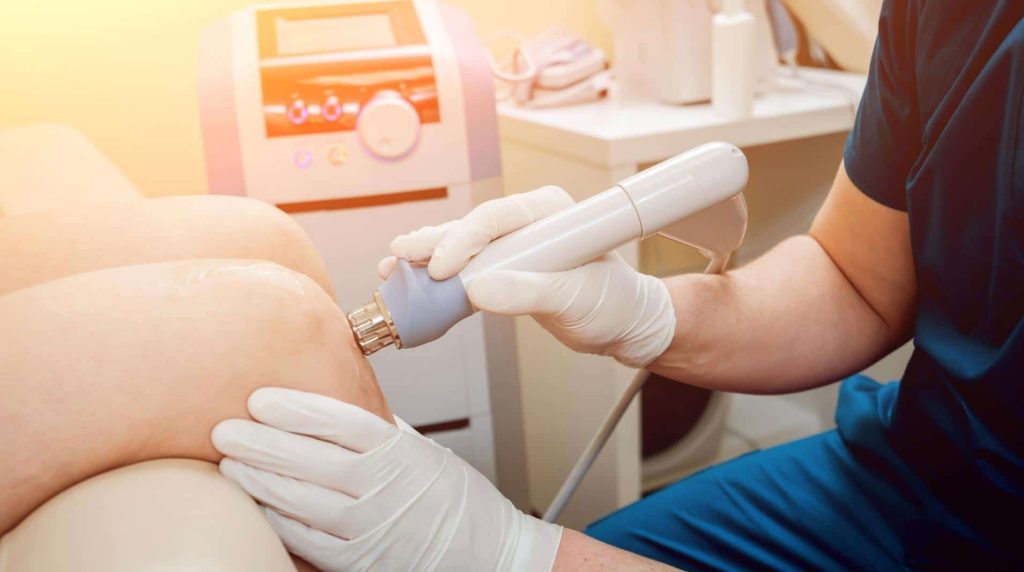
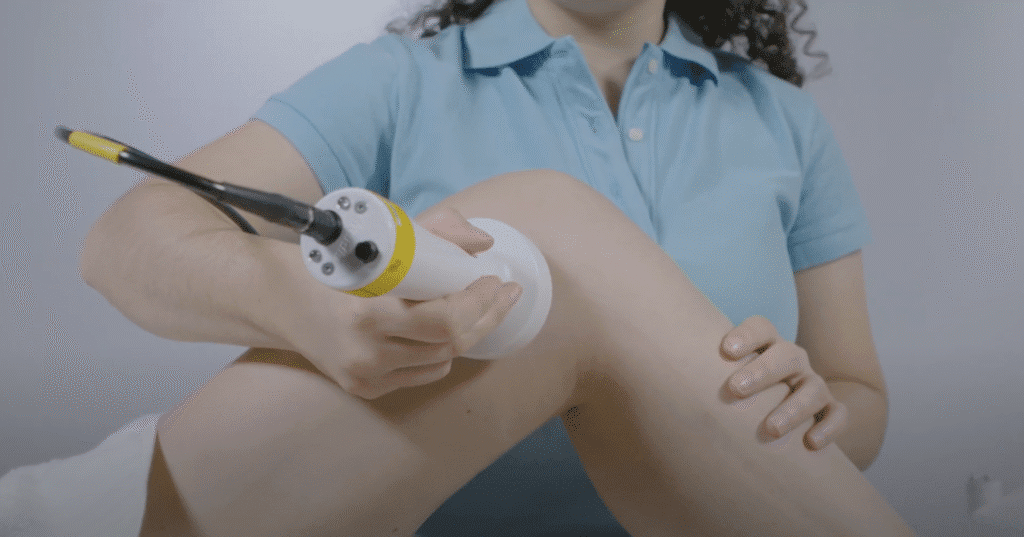
During laser treatment, the device is positioned over targeted points around the injured ligament and related structures. Sessions are comfortable, with no needles, medication or recovery downtime. Some patients notice reduced pain or easier movement early in their care, while longer-standing injuries commonly need a series of treatments alongside a graded rehabilitation programme.
A good plan may also include advice on activity modification, support or bracing where appropriate, and progressive strengthening and balance exercises. For example, an ankle ligament injury often requires calf strength, foot control and proprioception work to reduce the chance of another sprain. Laser treatment can support recovery, but restoring confidence and joint control still requires movement-based rehabilitation.
When low-level laser may be worth considering
PBMT can be considered for a range of ligament-related concerns, including ankle sprains, knee collateral ligament strains, thumb sprains, wrist injuries and persistent discomfort after an old joint injury. It may be particularly appealing for people seeking to reduce reliance on anti-inflammatory medication or who have found that rest alone has not restored normal function.
For active adults, the practical aim is often returning safely to training, work and daily movement. For older adults, it may be walking with greater confidence, managing stairs or maintaining independence. For children and teenagers with sporting injuries, the treatment plan needs to account for their diagnosis, growth, activity demands and the guidance of their treating clinician.
PBMT is well tolerated and suitable for many ages when delivered by trained practitioners. However, it should be used cautiously or avoided in certain circumstances, such as directly over a known or suspected cancer, the eyes, or areas requiring urgent medical assessment. A clinician should also review relevant medical history and medicines, including drugs that increase light sensitivity.
When a ligament injury needs urgent assessment
Do not assume every joint injury is a minor sprain. Urgent medical assessment is appropriate if there is obvious deformity, inability to bear weight, severe or worsening swelling, numbness, a cold or pale limb, fever, or pain that is disproportionate to the injury. A popping sensation followed by marked instability, locking, or loss of movement may also require imaging or specialist review.
Persistent symptoms deserve attention as well. If a joint continues to buckle, swell after activity, or remains painful beyond the expected recovery period, the original diagnosis may need to be revisited. An untreated fracture, significant tear, cartilage injury or nerve problem can resemble a straightforward ligament sprain.
A measured approach to stronger recovery
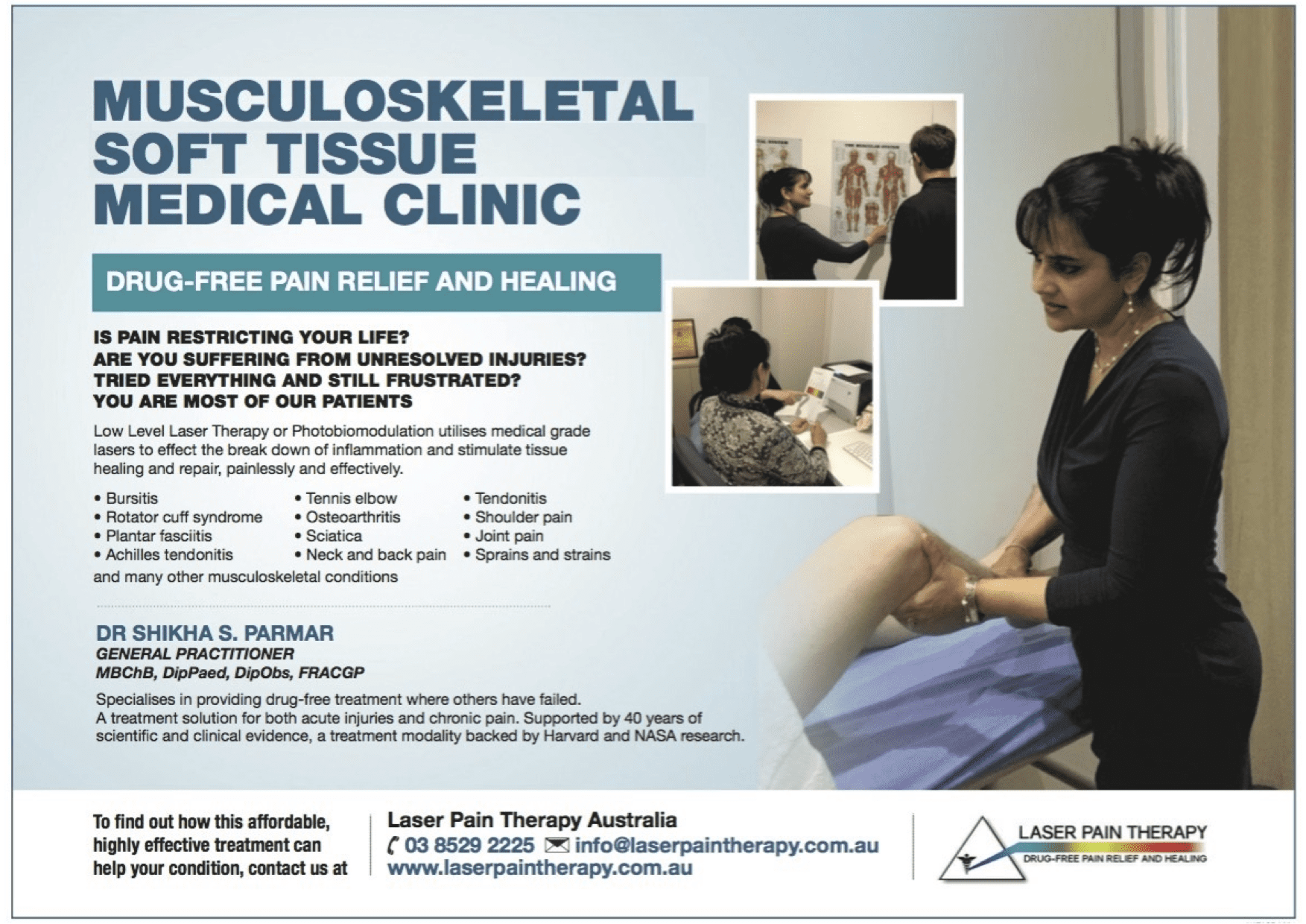
Low-level laser therapy is most valuable when it is part of a clear clinical strategy, not a stand-alone promise. At Laser Pain Therapy, treatment planning can be guided by a doctor-led review of your symptoms, diagnosis and functional goals, with PBMT tailored to the injury rather than applied as a generic wellness treatment.
The best next step is to have a persistent or recent ligament injury properly assessed, protect the joint when needed, and follow a plan that combines symptom relief with progressive restoration of strength and stability. Healing is not only about feeling less pain – it is about giving the joint the capacity to trust movement again.
Contact us today to arrange your consultation.
Located in Melbourne
(03) 8529 2225 Contact Us