A rolled ankle that still feels unstable, a painful knee after a sporting twist, or a wrist that has not settled after a fall can all point to a ligament injury. PBMT for ligament injuries is a drug-free treatment option that may help manage pain and inflammation while supporting the body’s normal tissue-repair processes. It is not a substitute for an accurate diagnosis or a structured rehabilitation plan, but it can be a valuable part of medically guided recovery.
Ligament injuries are often underestimated. Because swelling may reduce within days or weeks, many people return to activity before the joint has regained adequate strength, control and stability. That can turn an acute injury into repeated sprains, ongoing pain or a loss of confidence with everyday movement.
Why ligament injuries can take time to heal
Ligaments are strong bands of connective tissue that link bone to bone and help keep a joint stable. They guide movement at the ankle, knee, wrist, shoulder, thumb and other joints. Unlike muscle, ligaments have a relatively limited blood supply. This is one reason their healing can be slow, particularly after a moderate or severe tear.
A ligament injury may occur suddenly, such as an ankle inversion injury on an uneven surface, a knee twist during sport, or a fall onto an outstretched hand. It can also develop through repeated overload, poor joint control or returning to training before a previous injury has fully recovered.
The severity matters. A mild sprain involves overstretching or small fibre damage. A partial tear may produce more swelling, bruising and joint laxity. A complete rupture can cause marked instability and may require specialist assessment, bracing, rehabilitation or surgery depending on the ligament and the person’s activity demands. An anterior cruciate ligament injury, for example, requires a different management discussion from a minor ankle sprain.
How PBMT for ligament injuries works
Photobiomodulation Therapy, also known as PBMT or Low-Level Laser Therapy, uses specific wavelengths of light delivered to injured tissue. Unlike surgical lasers, PBMT does not cut, burn or heat tissue. Treatment is comfortable.
At a cellular level, light energy is absorbed by structures within cells, including the mitochondria. This can influence cellular energy production and signalling involved in inflammation and tissue repair. In a clinical setting, the aim is to support the healing environment around the injured ligament while helping to reduce pain and swelling that may limit movement and rehabilitation.
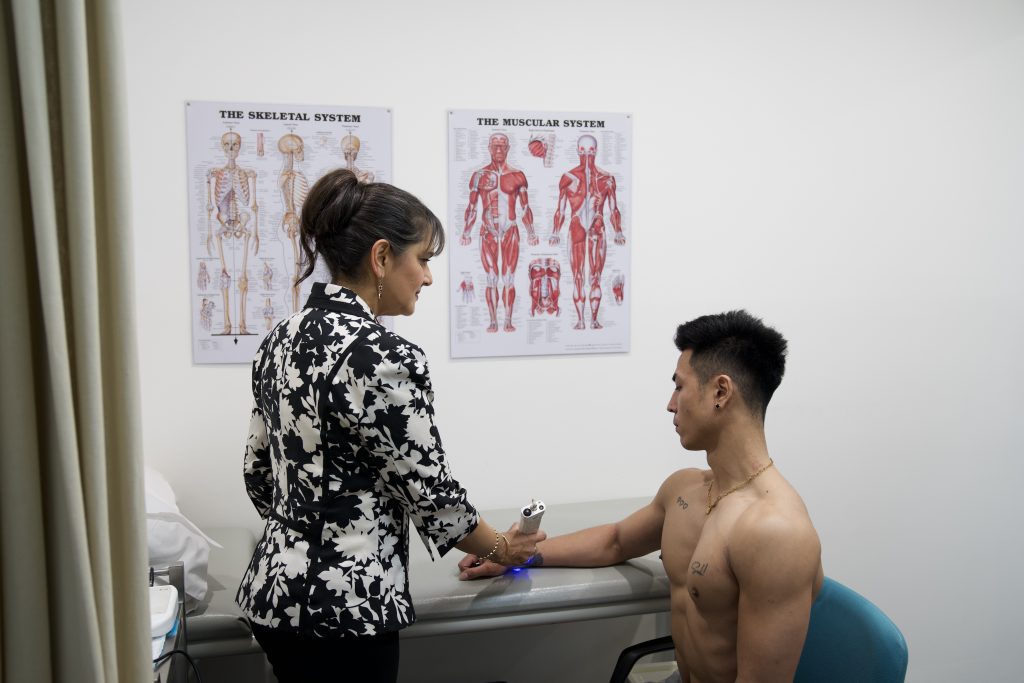
For a ligament injury, the laser is applied to the affected region and, where appropriate, to surrounding tissues that may be contributing to pain or altered movement. Treatment parameters should be selected according to the body area, depth of tissue, stage of injury and individual clinical presentation. This is why a one-size-fits-all approach is not appropriate.
PBMT is often considered when a patient wants to reduce reliance on anti-inflammatory or pain medicines, cannot tolerate certain medications, or has persistent symptoms despite rest and conventional care. It may also be used alongside physiotherapy-led exercise, bracing or activity modification. The goal is not simply to make the joint feel better temporarily. It is to help create the conditions for more functional recovery.
What the evidence means in practice
Research into photobiomodulation has identified effects on pain, inflammation and tissue repair across a range of musculoskeletal conditions. However, the strength of evidence for any individual ligament injury varies according to the type of injury, treatment protocol, laser dose and outcome being measured.
This distinction is clinically important. PBMT should not be presented as a guaranteed cure for a torn ligament, nor should it delay appropriate imaging, orthopaedic review or surgery when these are indicated. A complete ligament rupture, a major joint dislocation or significant mechanical instability needs careful medical assessment.
For suitable patients, PBMT can be a useful adjunctive treatment. Its practical value is often seen in reducing pain that prevents normal walking or exercise, settling local tenderness and swelling, and allowing patients to progress more comfortably with their rehabilitation programme. Results vary. Acute injuries may respond differently from long-standing pain after repeated sprains, and recovery is influenced by age, injury severity, general health, biomechanics and adherence to rehabilitation.
When a ligament injury needs assessment first
Self-managing a minor sprain with rest and gradual return to movement may be reasonable in some circumstances. But persistent or severe symptoms should not be ignored. Medical assessment is particularly important if there is inability to bear weight, obvious deformity, major swelling or bruising, numbness, a locking joint, a sensation of giving way, or pain that is not improving as expected.
Children and adolescents also deserve careful review. Growth plates, bone injuries and avulsion injuries can sometimes be mistaken for a simple sprain. Likewise, adults with osteoporosis, diabetes, reduced sensation or a history of recurrent falls may need a more cautious assessment.
A doctor-led consultation can review how the injury happened, examine joint stability and range of movement, and consider whether imaging or referral is needed. This helps distinguish a ligament sprain from a fracture, tendon injury, cartilage injury, nerve irritation or another source of pain. PBMT is most useful when it is directed at a clear clinical problem rather than applied as a generic wellness treatment.
What treatment and recovery may involve
A personalised treatment plan begins with the stage of the injury. In the early phase, management may focus on pain, swelling and protecting the joint from further damage. As symptoms settle, the emphasis shifts towards restoring movement, strength, balance and joint control.
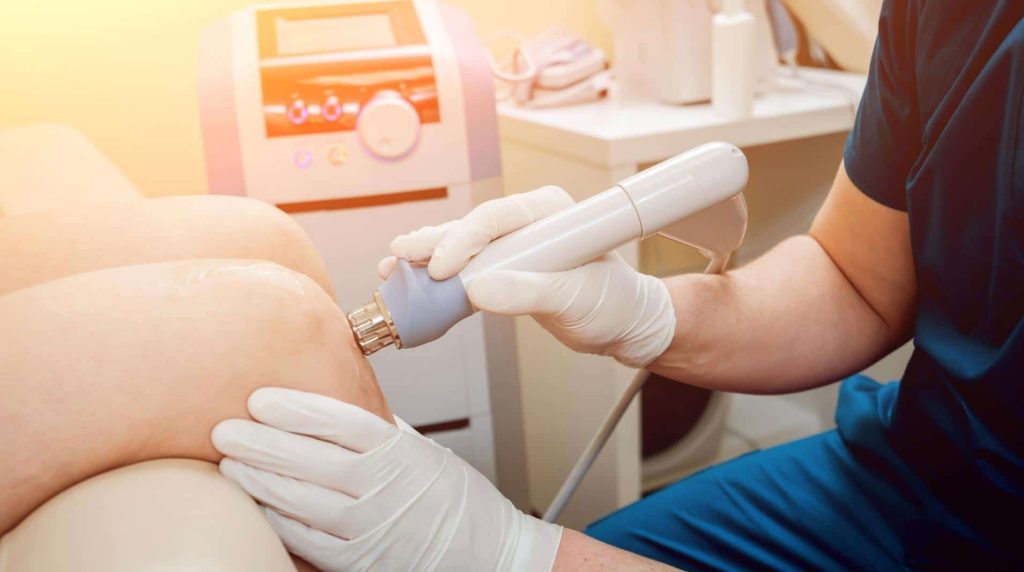
PBMT sessions are non-invasive. The laser device is positioned over the relevant area for a prescribed treatment time, with the dose adjusted to the tissue and treatment objective. Patients commonly describe the experience as comfortable, with little or no sensation during treatment. No recovery time is generally required, so people can usually return to normal daily activities afterwards, subject to any restrictions related to the injury itself.
The number and frequency of sessions depend on the injury. A recent ankle sprain may be managed differently from chronic thumb ligament pain or ongoing knee instability following an old sporting injury. Progress should be reviewed over time, not assumed after a single session. If pain is improving but the joint remains unstable, rehabilitation remains essential.
Rehabilitation still does the heavy lifting
Pain reduction can be helpful, but it creates a responsibility as well: feeling better does not always mean the ligament has regained its capacity to tolerate sport, lifting, uneven ground or rapid changes of direction. Returning too quickly is a common reason for reinjury.
A sound recovery plan may include appropriate loading, range-of-motion work, strengthening of nearby muscles and proprioception exercises that retrain the body’s awareness of joint position. For ankle injuries, balance and calf strength are often central. For knee injuries, quadriceps, hamstring and hip control may be important. The exact programme depends on the affected ligament and the person’s goals, whether that is walking comfortably, returning to work or playing competitive sport.
Bracing or taping may be useful for selected injuries, especially during an early return to activity. It should support rehabilitation rather than replace it. The best approach is one that matches symptom relief with objective improvements in movement, stability and function.
Is PBMT safe for ligament pain?
When delivered by trained clinicians using appropriate equipment and protocols, PBMT is a non-invasive treatment with a favourable safety profile. A thorough health review remains necessary. The treatment area, diagnosis, medical history and any relevant contraindications must be considered before therapy begins.
Patients should also be wary of assuming that all laser devices or treatment claims are equivalent. The wavelength, power, dose, treatment technique and clinical assessment matter. A medically supervised plan provides a clearer basis for deciding whether PBMT is appropriate and how it should sit alongside other care.
At Laser Pain Therapy, treatment planning is guided by clinical assessment and ongoing response, with the aim of helping patients move from pain-limited activity towards more confident function. If a ligament injury is holding back your work, exercise or daily life, an informed assessment can clarify whether PBMT and a targeted rehabilitation plan are the right next step.
Contact us today to arrange your consultation and take the first step towards recovery.
Located in Melbourne
(03) 8529 2225 Contact Us