A painful shoulder that wakes you at night, a knee that limits the stairs, or tendon pain that returns whenever you resume activity can make any new treatment claim feel hard to trust. PBMT outcomes should be assessed in practical terms: less pain, better movement, improved ability to work or exercise, and a clearer path towards recovery without relying solely on medication or invasive procedures.
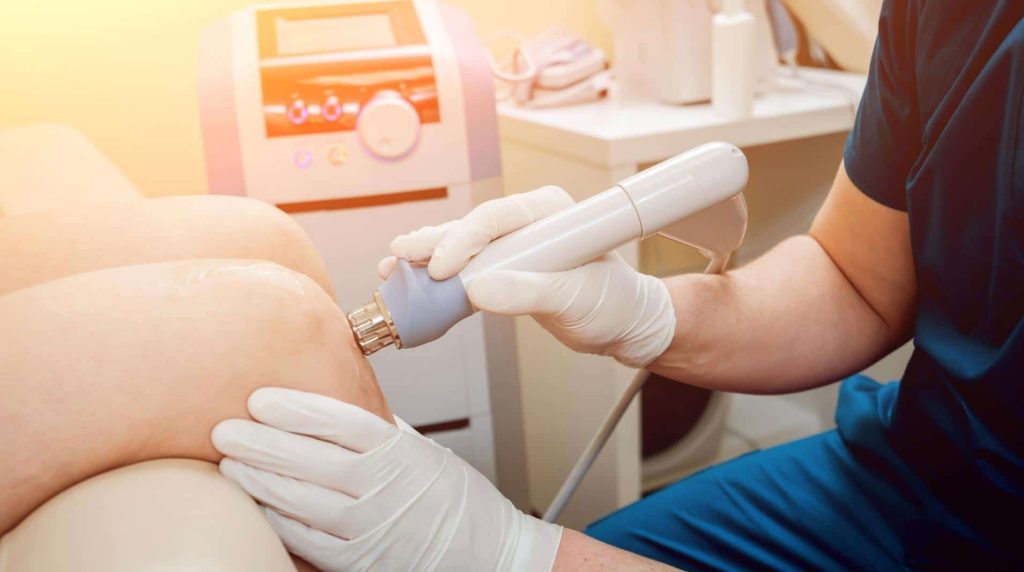
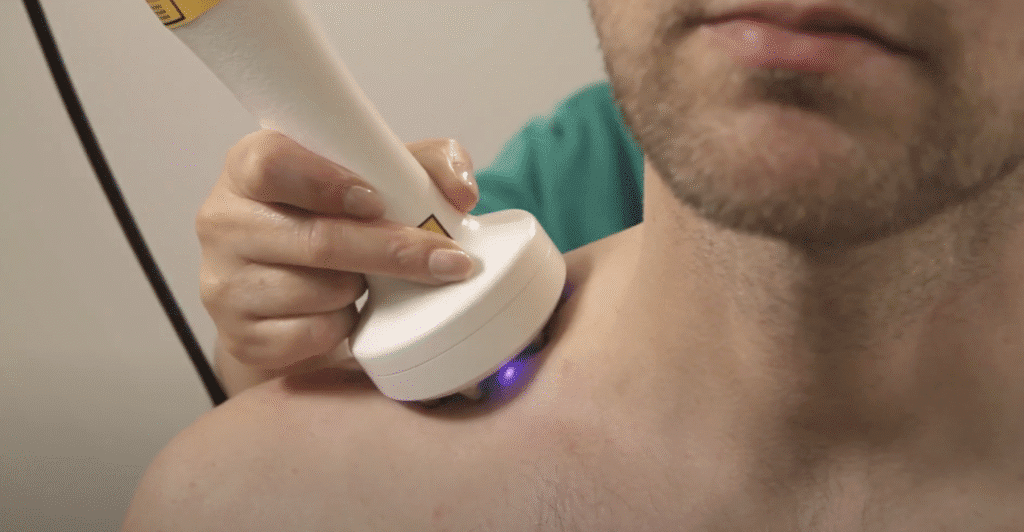
Photobiomodulation Therapy, also called Low-Level Laser Therapy or LLLT, uses specific wavelengths of light to support cellular processes involved in tissue repair, inflammation regulation and pain modulation. It is not a quick fix for every condition, and results vary according to the diagnosis, severity, duration of symptoms and the treatment plan. However, for appropriately selected musculoskeletal conditions, PBMT can be a valuable part of medically guided care.
What do PBMT outcomes look like in daily life?
The most meaningful outcome is not simply a number on a pain scale. It is whether you can turn your neck to reverse the car, walk further without limping, sleep more comfortably, return to the garden, or use your hand at work without guarding every movement.
Pain reduction is often the first change people notice. PBMT may help reduce local sensitivity and inflammation, particularly where pain is driven by irritated soft tissue, overloaded tendons, joint inflammation or nerve-related symptoms. Some patients experience a noticeable improvement after the first few sessions. Others with longstanding pain improve more gradually as treatment supports recovery over several weeks.
Function is equally important. When pain settles, movement is often easier, but restoring function may take longer than reducing symptoms. A stiff shoulder, arthritic knee or chronic lower back problem may involve weakness, altered movement habits and reduced confidence as well as pain. In these situations, a good result is progressive improvement rather than expecting one treatment to restore full capacity immediately.
For acute injuries, PBMT may be used to support management of swelling, pain and soft tissue healing. For chronic conditions, the aim is commonly to calm persistent inflammation, improve tissue tolerance and help the person return to activities that pain has restricted. The expected result should always fit the condition being treated.
Why PBMT outcomes differ between patients
PBMT is a clinical treatment, not a one-size-fits-all wellness service. Laser settings, treatment area, dose, frequency and the number of sessions need to reflect the tissues involved and the person’s presentation. A superficial tendon problem is approached differently from deep hip pain, osteoarthritis or symptoms linked to nerve irritation.
The diagnosis matters
Pain is a symptom, not a diagnosis. The same area of pain can have very different causes. Shoulder pain may arise from tendons, bursae, the joint itself, the neck or referred pain from another source. Knee pain may relate to osteoarthritis, a ligament injury, patellar tendon overload or a meniscal problem.
This is why a proper assessment and diagnosis review matters before treatment begins. PBMT is most useful when it is directed at a condition likely to respond, rather than applied broadly to an area that hurts. Where symptoms suggest a fracture, serious infection, progressive neurological issue or another condition requiring urgent investigation, laser therapy is not a substitute for appropriate medical care.
How long the pain has been present
Recent injuries may respond differently from pain that has persisted for months or years. With an acute ankle sprain or muscle strain, treatment may focus on pain, swelling and early tissue recovery. With chronic pain, there may be changes in tissue quality, joint mobility, muscle strength, sleep and nervous system sensitivity.
Chronic pain can still improve, but it often requires patience and a structured plan. An early reduction in pain is encouraging, yet sustained progress depends on rebuilding movement and load tolerance in a way that does not repeatedly aggravate the condition.
The broader recovery plan
PBMT can be used alongside medical management, appropriate rehabilitation, activity modification and, where needed, further investigation. For example, a person with elbow tendon pain may need to alter repetitive gripping at work while the tendon settles. Someone with knee osteoarthritis may benefit from treatment that makes exercise more manageable, while still needing a realistic plan for strength, weight management where relevant and joint loading.
The goal is to use improved comfort and movement as an opportunity for more durable recovery.
When should you expect to notice results?
There is no single timetable for PBMT outcomes. Some people report reduced discomfort or easier movement shortly after a session. This can be particularly helpful when pain and muscle guarding are limiting activity. For others, changes are incremental and become clearer after several treatments.
As a general principle, acute soft tissue problems may show change sooner than complex chronic conditions. Longstanding arthritis, persistent tendinopathy, recurrent back pain and pain after a previous injury may require a longer treatment course. The clinician should monitor whether there is a meaningful response and adjust the plan where appropriate.
Improvement is not always linear. It is possible to have a better week, then a temporary flare after doing more than the recovering tissues can tolerate. This does not automatically mean treatment has failed. It does mean the flare should be considered in context, with attention to activity levels, sleep, work demands and the original condition.
A clinically responsible plan includes reassessment. If symptoms are not improving as expected, the diagnosis, treatment approach or need for additional medical investigation should be reviewed. Continuing any treatment indefinitely without a clear purpose is not good care.
How outcomes are measured in a medical setting
A patient may feel that treatment is helping before they can explain exactly why. That experience matters, but it should be supported by measurable changes. At Laser Pain Therapy, medically supervised care is designed to look beyond a brief change in symptoms and assess whether treatment is improving the person’s overall function.
Measures may include pain severity and pattern, range of motion, walking or activity tolerance, strength, sleep disruption and the ability to perform specific daily tasks. For an office worker with wrist pain, typing tolerance may be a useful marker. For a parent with knee pain, it may be getting up from the floor or keeping up with children. For an active person, it may be a gradual return to running, cycling or training without a significant flare.
Medication use can also be relevant. Some patients seek PBMT because they want a drug-free option or wish to reduce their reliance on pain medication under appropriate medical guidance. The aim is not to stop prescribed medicines abruptly. It is to assess whether improved pain control and function allow medication needs to be reviewed safely with the treating doctor.
What PBMT can and cannot promise
PBMT is non-invasive, drug-free and generally comfortable. It does not involve injections, surgical incisions or the recovery period associated with an operation. These are meaningful advantages for people seeking conservative care, including older adults, people managing multiple health concerns and parents looking for suitable treatment options for youth injuries.
However, no ethical medical clinic should promise a cure for every painful condition. Severe joint degeneration, major structural tears, advanced neurological symptoms or pain caused by an unrecognised medical condition may need other treatment pathways. PBMT may still have a role in symptom management for some people, but its place should be decided after clinical assessment.
The strongest results usually come from matching the right treatment to the right problem, using appropriate parameters and reviewing progress honestly. Research supporting photobiomodulation is encouraging across a range of musculoskeletal applications, but outcomes depend on clinical judgement rather than the laser device alone.
Making a decision based on realistic expectations
If pain has persisted despite rest, medication, physiotherapy or other conservative measures, it is reasonable to ask whether PBMT could be appropriate. Bring any scans, reports, medication details and relevant history to your consultation. Clear information helps identify whether the source of pain has been adequately investigated and whether laser therapy fits your needs.
Ask what improvement would be realistic for your condition, how progress will be measured and when the plan will be reviewed. A worthwhile treatment plan gives you more than temporary relief. It should help you move with greater confidence and make everyday life feel possible again.
Contact us today to arrange your consultation and take the first step towards recovery.
Located in Melbourne
(03) 8529 2225 Contact Us